Project Preview
2025
Vex was born on the streets and social networks of Latin America, where thousands of people trade second-hand fashion every single day. From Instagram feeds and disappearing stories to WhatsApp chats and informal meet-ups, resale is already happening at scale. The demand is massive, the culture is alive, and sustainability is no longer a niche. Yet the experience remains fragmented, risky, and inefficient.
Buyers struggle to trust what they see. Sellers lose visibility, time, and potential sales. Payments are informal, logistics are improvised, and great pieces often get lost in the noise of social media. What should be an exciting discovery process becomes chaotic, unsafe, and exhausting for both sides.
Our insight was simple but powerful: sustainable fashion deserves a premium, reliable experience. Second-hand should not feel like a compromise—it should feel aspirational, social, and seamless. If people expect a high-quality experience when buying new clothes, why should circular fashion be any different?
Vex transforms this informal ecosystem into a purpose-built platform where fashion, technology, and community come together. We combine a visually driven, social feed with AI-powered tools that remove friction from selling and build trust in buying. Publishing a garment takes seconds, discovery feels natural and entertaining, and every item becomes content with context, story, and style.
By turning resale into a social experience and leveraging artificial intelligence to simplify the process, Vex makes second-hand fashion feel as intuitive, exciting, and trustworthy as buying new—while creating real impact, one item at a time.
Rol
Founder - Product Designer & Product Manager
Project
Personal Project - Social Marketplace Tech Start Up
Duration
4 Months. From initial business validation to the delivery of the High-Fidelity MVP.
Softwares & Tools
Second-hand fashion is growing fast, but it runs on informal, fragmented systems that don’t scale. Buyers lack trust, sellers face friction, and millions of garments remain offline because there is no seamless, social, and scalable platform built for circular fashion.
Vex transforms second-hand fashion into a seamless, social, and scalable experience. By combining a visual, community-driven marketplace with AI-powered tools, Vex removes friction from selling, builds trust in buying, and enables individuals and stores to digitalize and sell inventory at scale—making circular fashion as easy and desirable as buying new.
A fragmented and untrustworthy resale experience
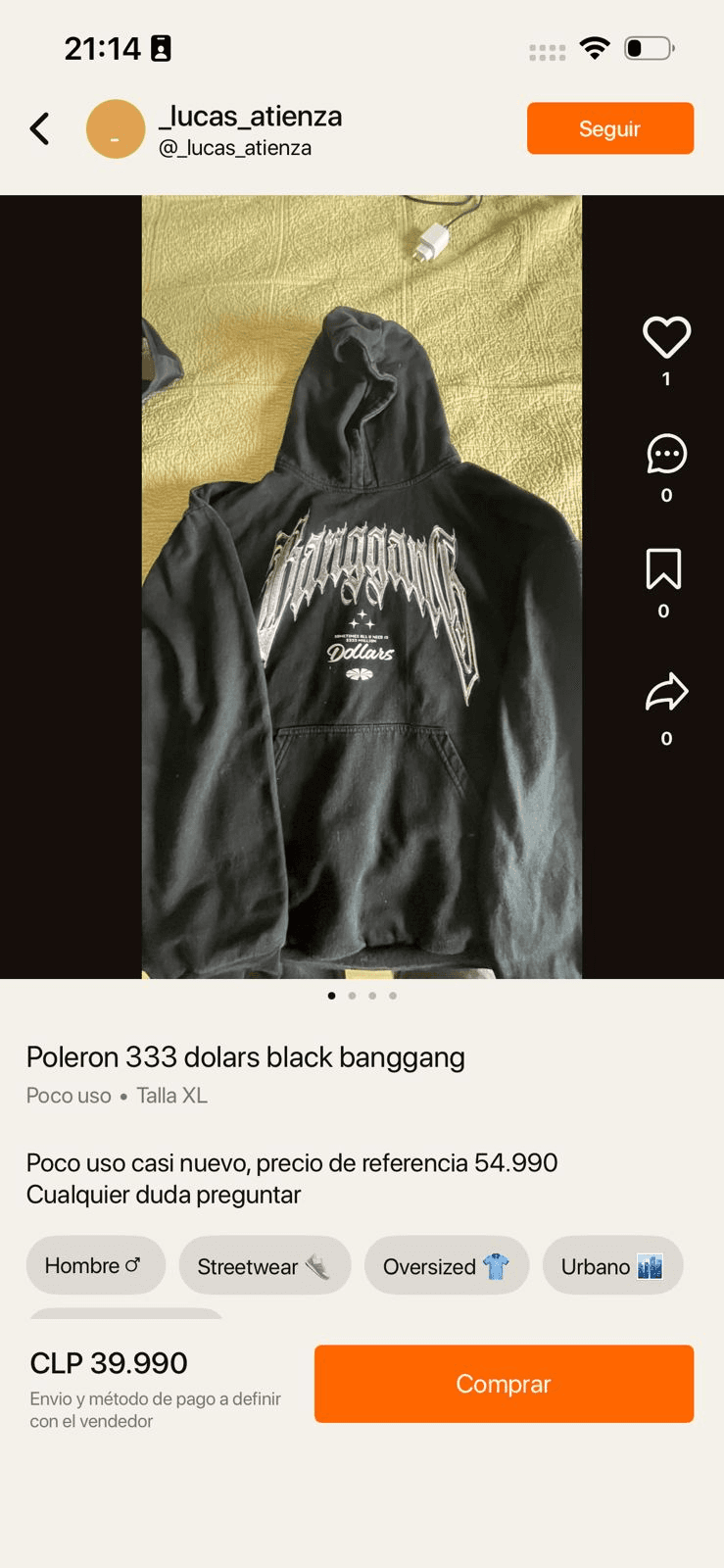
Problem addressed: Second-hand fashion lives across social networks and messaging apps not built for commerce. Buyers face low trust and unsafe transactions, while sellers lose visibility and spend time managing manual conversations.
Solution: Vex centralizes resale into a single, purpose-built platform where discovery, trust, and transactions happen seamlessly through a visual, social experience.
"Turning a risky informal deal into a guaranteed, premium exchange."
2. High friction in selling second-hand
Problem addressed: Listing items is slow and repetitive, requiring manual descriptions, pricing, and constant messaging. This friction limits supply and discourages participation.
Solution: Vex uses AI to publish garments in seconds, removing friction and making selling effortless for everyday users.
"Turning a risky informal deal into a guaranteed, premium exchange."
3. Inability to scale second-hand inventory
Problem addressed: Second-hand stores cannot digitalize inventory efficiently. Uploading products one by one is operationally unviable, keeping thousands of garments offline.
Solution: Vex enables bulk inventory digitalization through AI and LLMs, allowing stores to scale, professionalize, and sell at internet speed.
"Buying secondhand isn't just a transaction; it's a community hunt."

1.1 Problem Space – Context Deep Dive
Second-hand fashion is growing rapidly, driven by sustainability, affordability, and cultural relevance—especially in Latin America. However, despite increasing demand, the ecosystem remains informal, fragmented, and inefficient. Most transactions take place across social networks and messaging apps that were not designed for commerce, resulting in poor user experiences and limited scalability.
Buyers face uncertainty around product quality, pricing fairness, and transaction safety, while sellers struggle with low visibility, repetitive manual work, and time-consuming communication. Although existing resale platforms attempt to structure this market, they often fail to deliver a social, visual, and engaging experience aligned with how people discover and consume fashion today.
Pivotal Question
How might we transform an informal and fragmented second-hand fashion ecosystem into a trusted, scalable, and desirable experience that feels as seamless and engaging as buying new?
This question guided the entire discovery phase and framed the evaluation of existing solutions and opportunity areas.
1.2 Research Findings
Research revealed that current solutions fall into two main categories: social platforms and traditional resale marketplaces. Social platforms generate high engagement but introduce extreme friction, including technical anxiety, excessive time investment, unclear pricing, and a lack of professional presentation. Traditional resale platforms reduce some of this friction but remain transactional, visually uninspiring, and disconnected from social behavior.
Across both categories, inventory scalability emerged as a critical unresolved issue. Uploading products manually remains slow and inefficient, particularly for second-hand stores and resellers. No existing solution successfully combines speed, trust, visual discovery, and scalability into a single, cohesive experience.
These findings highlighted a clear gap in the market: second-hand fashion lacks a platform that treats resale as both a social experience and a scalable system.
1.3 Interviews and Focus Groups
Qualitative research was conducted through interviews and focus groups with buyers, casual sellers, and second-hand store owners. Participants consistently described second-hand shopping as frustrating, despite their strong interest in sustainable fashion.
Buyers reported anxiety related to trust, inconsistent product information, and unsafe meet-ups. Casual sellers expressed frustration with the effort required to list items, manage conversations, and maintain visibility as posts quickly disappear. Store owners identified inventory digitalization as their primary barrier, emphasizing that uploading products one by one is operationally unviable at scale.
Common Pattern Identified
Across all user types, the same frustration emerged: users are willing to participate in second-hand fashion, but the surrounding friction makes the experience inefficient and unreliable.
This insight validated the need for a solution that removes friction through automation, strong visual design, and social interaction, laying the foundation for Vex’s product strategy and technological direction.
Focus Group
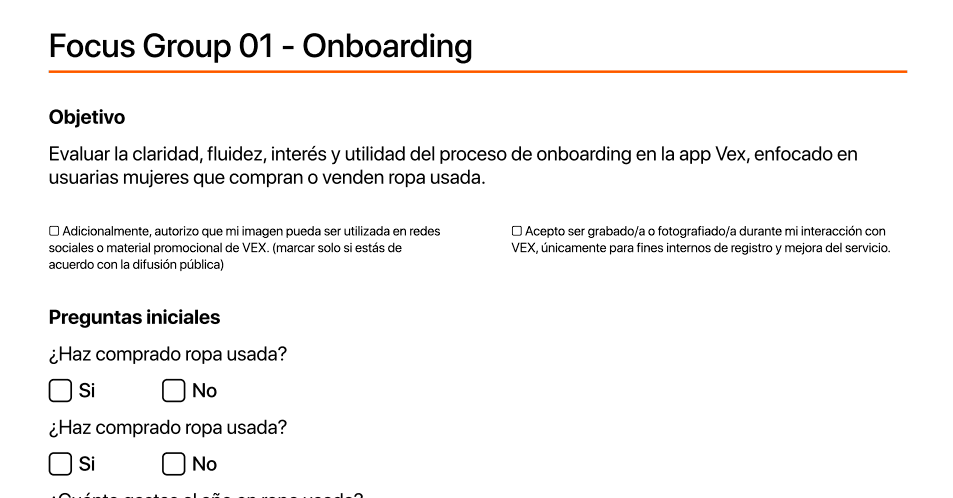
Download Focus Group Questions
2.1 Synthesis of Research – From Findings to Strategic Pillars
The research phase revealed recurring patterns across quantitative and qualitative insights. These findings were synthesized into strategic pillars that explain why second-hand fashion fails to scale and where design and technology can create the most impact.
One key pillar identified was Complexity Paralysis. Users are overwhelmed by the number of steps required to buy or sell second-hand items—posting content, answering messages, negotiating prices, and coordinating logistics manually. This complexity discourages participation and limits supply.
A second pillar was The Trust Gap. Buyers lack confidence in product quality, pricing fairness, and transaction safety, while sellers struggle to appear credible and professional within informal platforms. Trust is not embedded in the system; it relies entirely on personal judgment and risk.
The third pillar was Scalability Breakdown. While individual transactions can happen informally, the ecosystem collapses at scale. Second-hand stores and power sellers cannot digitalize inventory efficiently, preventing growth, visibility, and professionalization.
Key Insight
Users do not resist second-hand fashion because of lack of interest or values; they resist it because the experience is cognitively demanding, unreliable, and not built to scale. Reducing friction and embedding trust at a system level unlocks both participation and growth.
2.2 Pain Points & Opportunities – From Problems to Design Leverage
Research identified several concrete pain points that directly informed opportunity areas for Vex.
Users experience high cognitive load when selling, caused by repetitive tasks such as writing descriptions, setting prices, and managing conversations. This creates an opportunity to automate and simplify listing through AI, reducing effort to near zero.
Buyers face uncertainty and anxiety around authenticity, condition, and pricing. This opens an opportunity to use visual-first content, structured product data, and social signals to increase transparency and confidence.
Sellers struggle with visibility decay, as posts quickly disappear in social feeds. This highlights an opportunity to design persistent discovery mechanisms that maximize exposure over time.
Second-hand stores encounter operational bottlenecks when attempting to upload inventory at scale. This creates a clear opportunity to build bulk digitalization tools powered by AI and LLMs, enabling professional resale operations.
Each pain point pointed toward the same conclusion: the solution must remove friction proactively rather than asking users to adapt.
Complexity Paralysis
Business owners are overwhelmed by the sheer number of technical decisions required to launch a website. The lack of a streamlined path leads to project abandonment and digital stagnation.
Insight 1 - Cognitive Overload
Users feel that excessive customization options are a burden rather than a benefit, making it difficult to make progress without professional help.
Insight 2 - Decision Fatigue
The "DIY" approach fails because entrepreneurs prioritize business growth over learning web design, leading to unfinished or unprofessional results.
Understanding the User: Pain Points & Opportunities
Pain Points
Extreme Inertia: Development cycles are too slow, causing businesses to lose sales opportunities while waiting for their site to go live.
Technical Dependency: A high frustration level exists due to the inability to update basic content without expensive external technical assistance.
Information Asymmetry: Clients often feel vulnerable and overwhelmed by technical jargon used by traditional providers.
Opportunities
Zero-Code Management: Developing an administrative interface designed for business speed, requiring zero technical knowledge.
Express Delivery Model: Utilizing a pre-validated component framework to slash turnaround times from weeks to 48 hours.
Transparent Reliability: Replacing complex quotes with standardized, predictable solutions that guarantee professional credibility instantly.
The Target Persona & HMW
El proceso de profesionalización musical suele ser solitario y autodidacta.
Los artistas carecen de orientación sobre cómo presentarse, monetizar o planificar su crecimiento.
The "Overwhelmed Seller"
A B2C entrepreneur with a validated service but a weak digital presence that undermines their authority in the market.
How Might We (HMW)
How might we provide B2B entrepreneurs with a high-authority digital storefront without requiring any technical involvement from their side?
2.3 Understanding the User
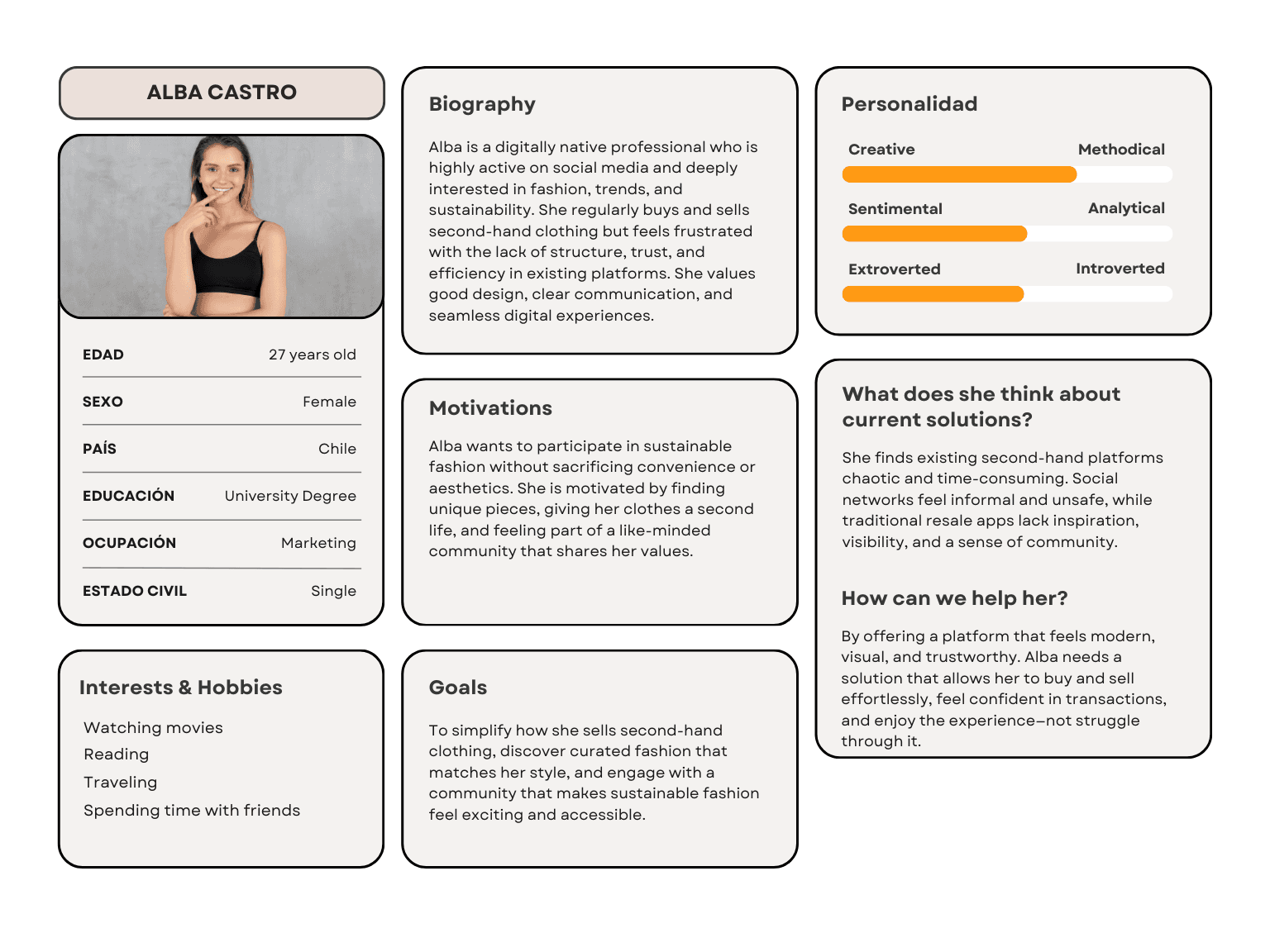
Based on research patterns, a primary persona was defined to guide product and strategic decisions.
Primary Persona: The Overwhelmed Seller
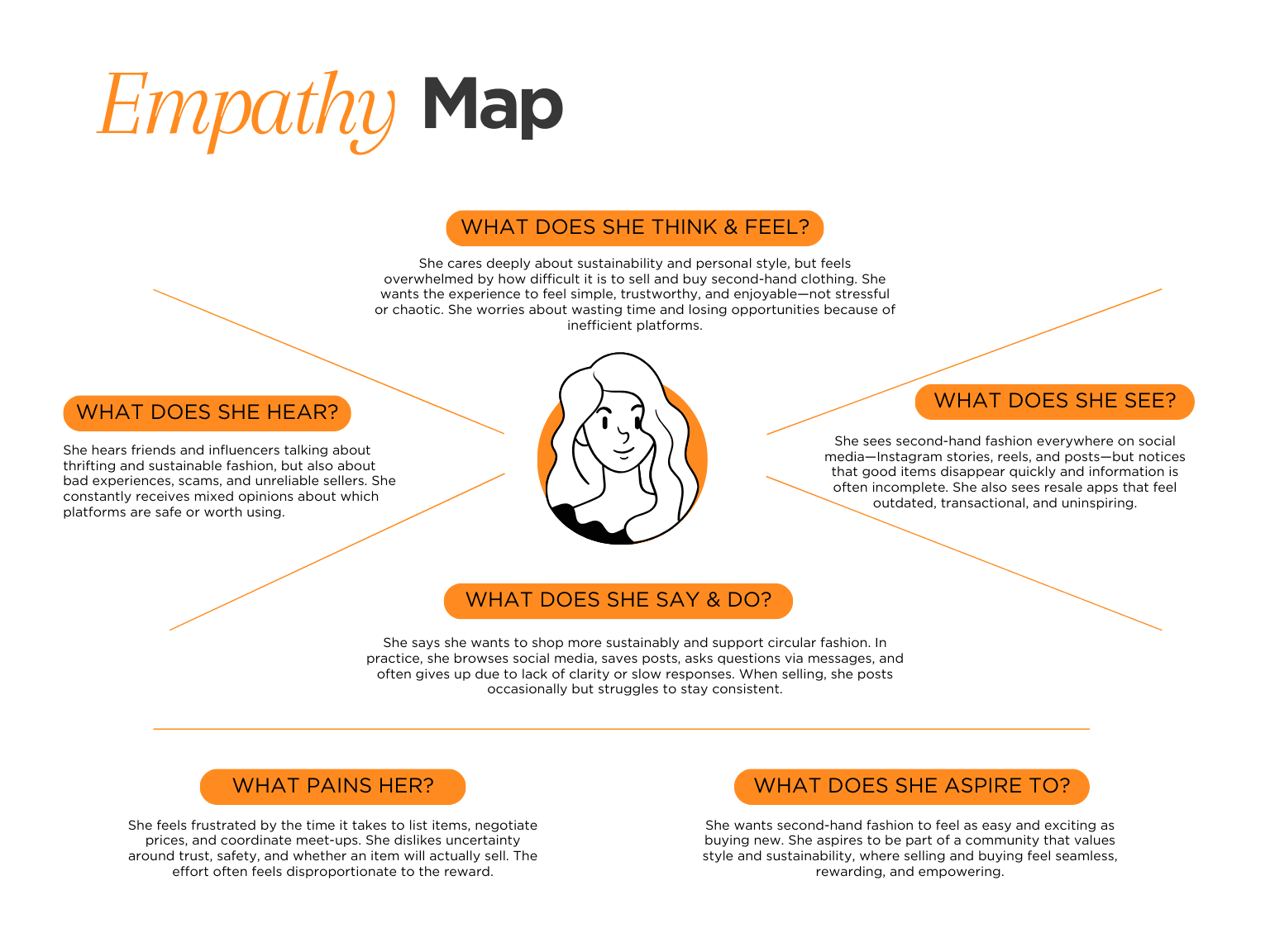
This user actively participates in second-hand fashion but feels limited by time, tools, and visibility. They value sustainability and extra income but are discouraged by the effort required to sell effectively. They are not technically complex users, yet they expect modern, intuitive digital experiences.
They feel frustrated by repetitive tasks, anxious about trust, and disconnected from existing platforms that feel either too informal or too transactional. Their motivation is strong, but their patience for friction is low.
How Might We (HMW)
How might we enable people who want to sell second-hand fashion to do so quickly, confidently, and at scale—without increasing cognitive load or operational effort?
This HMW question became the strategic anchor for Vex, aligning user needs with product design, AI integration, and long-term platform vision.
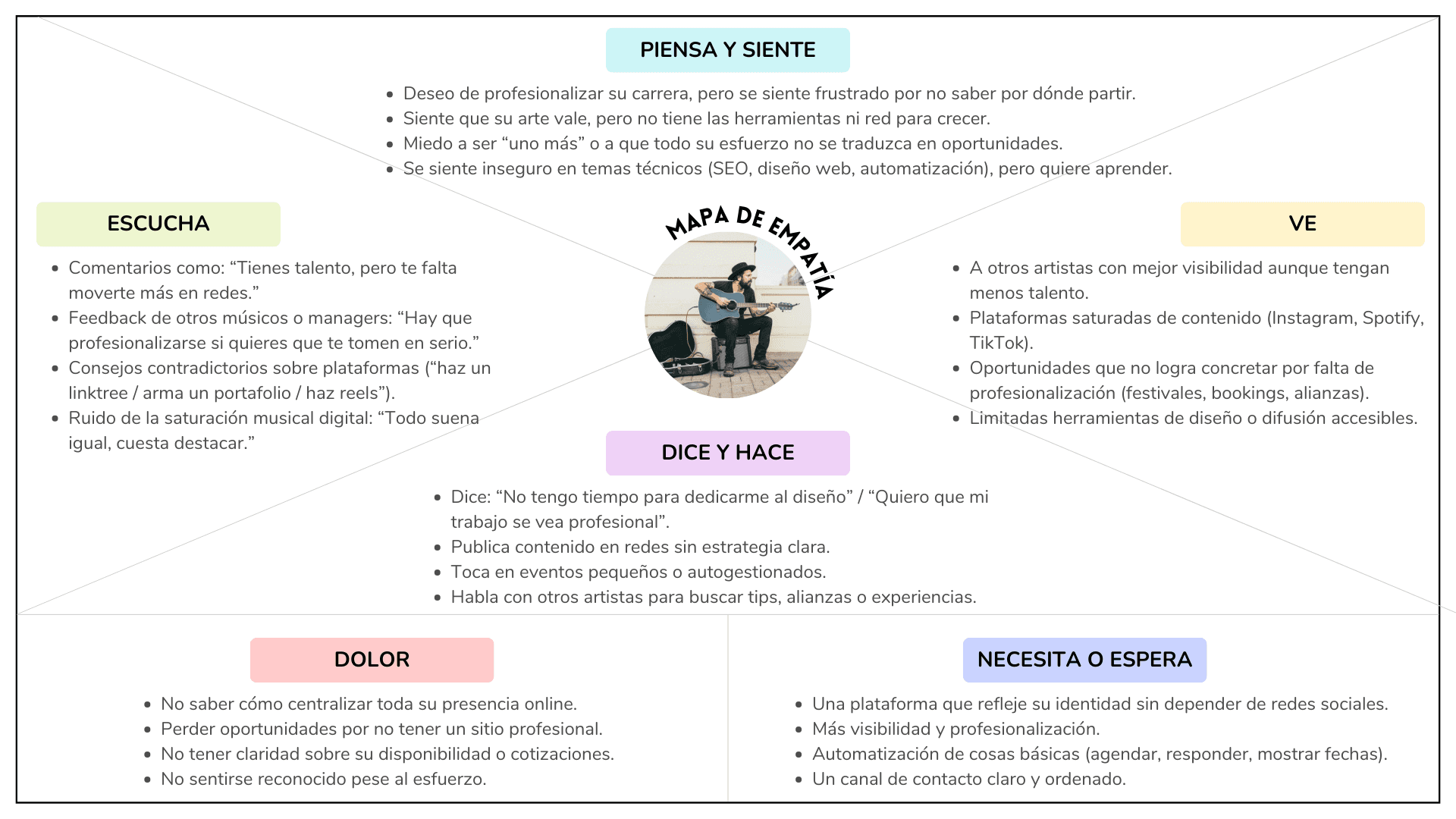
Empathy Map
Target User
2.4 Puntos de dolor + Oportunidades
The focus group revealed that users are genuinely interested in buying and selling second-hand fashion, but their engagement is highly sensitive to clarity, effort, and emotional confidence during the onboarding process. Participants evaluated the experience positively in terms of visual design and intention, yet moments of confusion, perceived length, and uncertainty reduced their initial motivation. Overall, the onboarding experience plays a critical role in determining whether users feel confident enough to continue using the app.
1

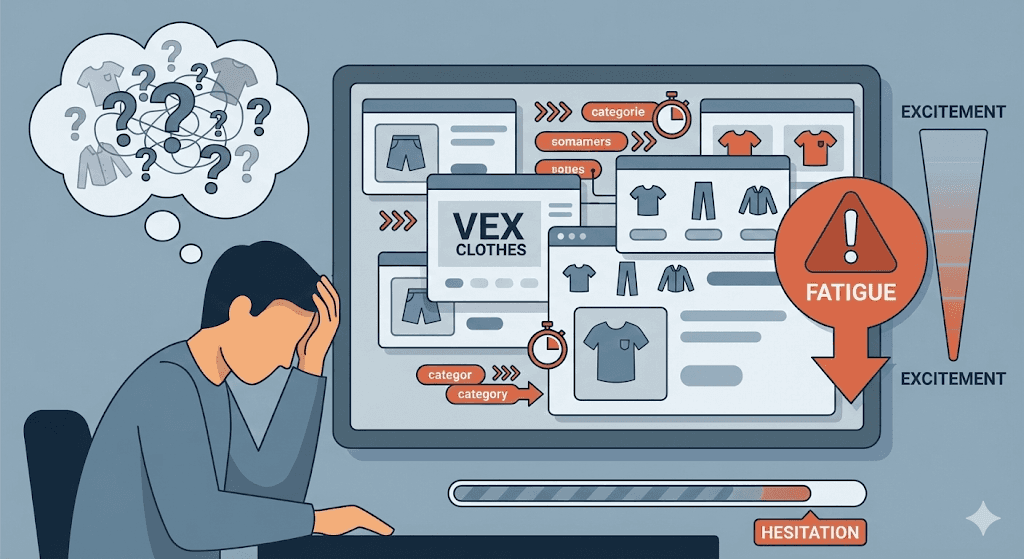
Cognitive overload during onboarding
4 out of 6 participants reported feeling that the onboarding required too many decisions in a short amount of time, especially when selecting styles, brands, and categories. This created moments of hesitation and fatigue, reducing excitement toward the end of the flow.
Reduce perceived effort through progressive onboarding
Simplifying early steps and postponing detailed preferences can lower cognitive load. Allowing users to refine their profile later creates a smoother and less demanding first experience.
2
Lack of representation in options
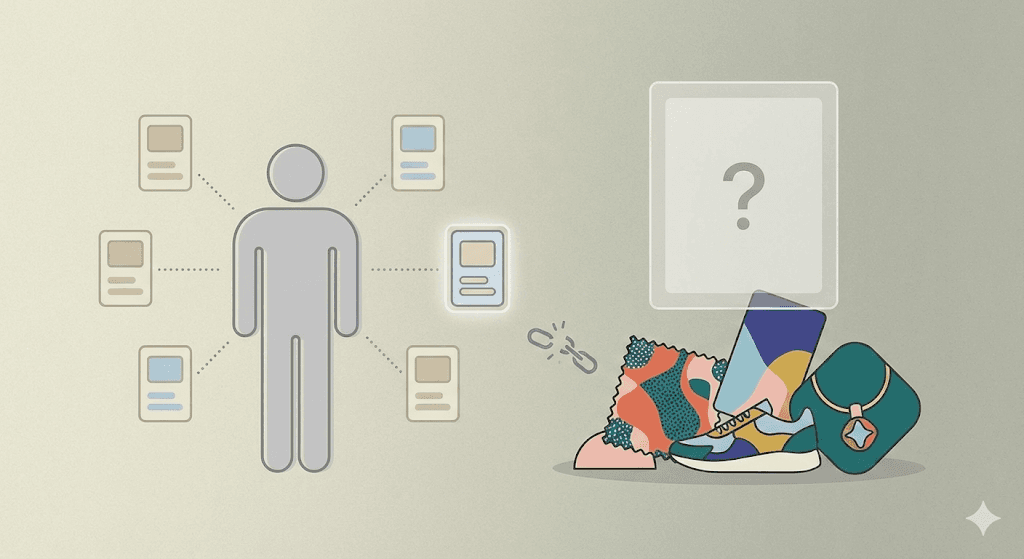
4 out of 6 participants indicated that they did not fully feel represented by the available styles, brands, or categories. Missing brands and limited personalization made parts of the experience feel generic rather than tailored.
Increase perceived personalization and representation
Expanding style, brand, and category options—or clearly communicating that preferences will improve over time—can help users feel seen and understood from the start.
3


Unclear purpose behind certain questions
3 out of 6 participants questioned why some personal information was requested, particularly in early steps. Even when they were willing to answer, the lack of explanation generated mild discomfort and reduced trust.
Build trust through transparency
Brief explanations about why personal data is requested can significantly increase user confidence. Transparency directly supports trust and long-term engagement.
4

Drop in motivation at the final screen
4 out of 6 participants expressed that although the onboarding looked complete, the final screen did not fully motivate them to immediately start using the app. The sense of “what’s next” was not strong enough to trigger action.
Strengthen the activation moment
Enhancing the final onboarding screen with a clear call to action, immediate value, or preview of content can convert curiosity into active usage and reinforce emotional momentum.
3.1 Brainstorm – From Insights to Brand & Design Direction
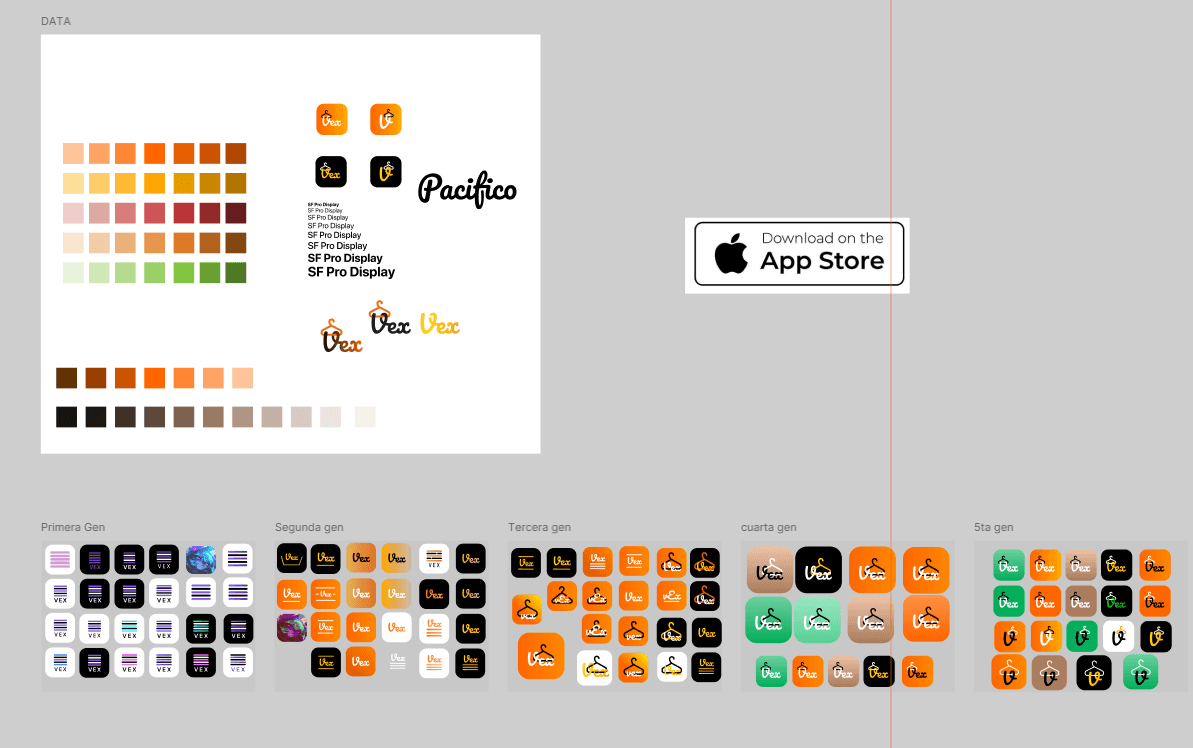
The ideation phase began with an open-ended brainstorm that translated research insights into design and brand principles. Based on the discovery phase, it became clear that Vex could not look or feel like a traditional resale platform. The brand needed to distance itself from perceptions of disorder, informality, and low value commonly associated with second-hand fashion.
Early brand exploration focused on defining a tone that felt modern, social, and premium, while still being accessible and culturally relevant. Visual references were drawn from social platforms, fashion editorials, and creator-driven ecosystems rather than e-commerce benchmarks. This process informed decisions around logo simplicity, warm yet confident color palettes, and typography that balanced personality with clarity.
In parallel, brainstorming sessions explored how the brand voice and visual identity could reinforce trust, reduce cognitive friction, and make circular fashion feel aspirational. The result was a brand system designed to feel closer to a social network than a marketplace, supporting both emotional engagement and usability.
Brainstorm
3.2 User Stories & MVP – Defining the Minimum Viable Experience
User stories were derived directly from interviews, focus groups, and empathy mapping. Instead of defining features in isolation, the team focused on what users needed to achieve with minimal effort during their first interactions with the app.
Core user stories included the ability to quickly create a profile, publish a garment without friction, explore content visually, and feel confident interacting with other users. These stories defined the scope of the MVP, prioritizing features that reduced effort, increased trust, and encouraged immediate engagement.
The MVP intentionally avoided complex edge cases and secondary functionalities. The goal was to validate whether a visual, social, and AI-assisted resale experience could effectively replace informal workflows and motivate users to continue using the platform.
User Story + MVP

3.3 Navigation Flows – Identifying Critical User Routes
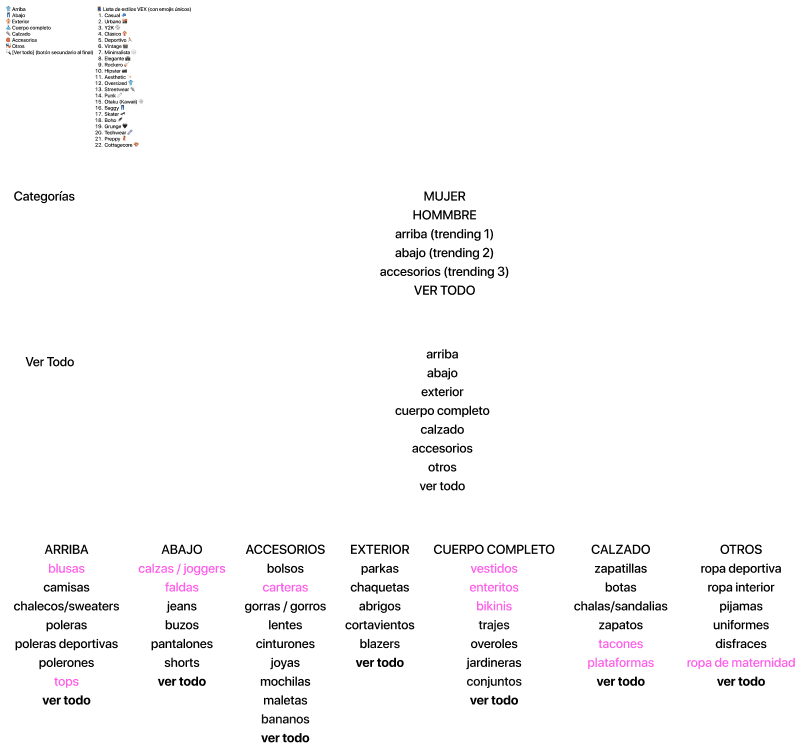
With the MVP defined, navigation flows were designed around the platform’s red routes, or critical paths that deliver core value to users. These routes focused on three essential actions: onboarding and profile creation, item publishing, and content discovery.
Flows were mapped to minimize steps, reduce decision fatigue, and maintain momentum throughout the experience. Special attention was given to transitions between social content and transactional actions, ensuring users could move seamlessly from inspiration to action without losing context.
These navigation flows served as the structural backbone of the app, guiding interface decisions and informing future iterations.
Flujos Principales
4.1 Wireframing
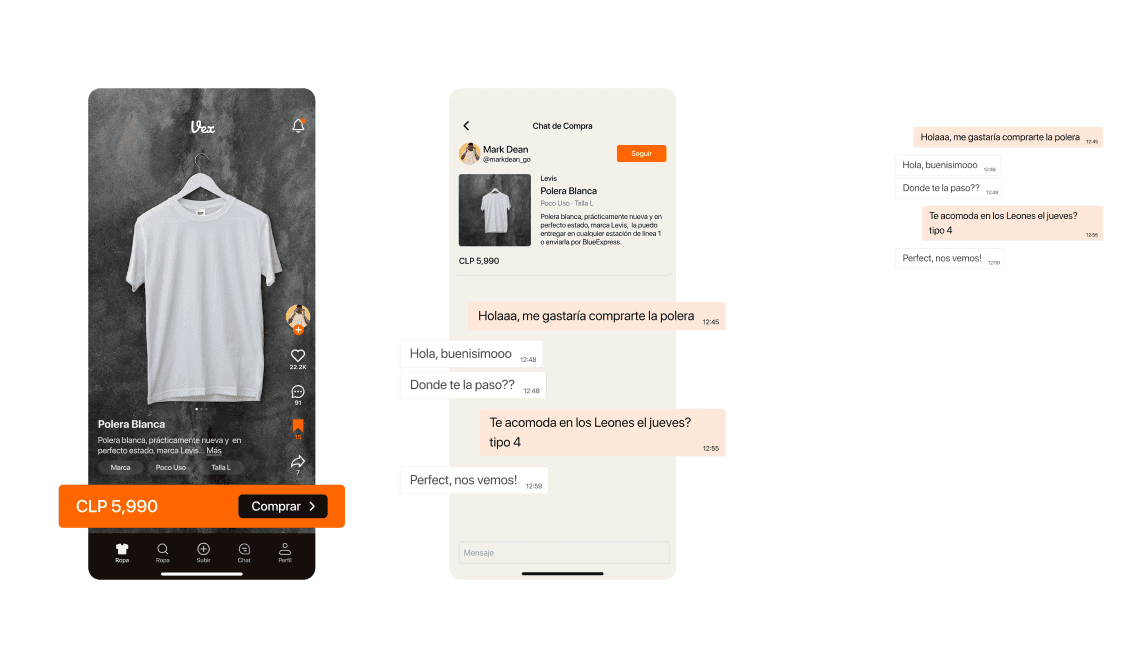
The execution phase began with low-fidelity wireframes focused on validating information architecture, layout hierarchy, and core interactions. At this stage, visual design was intentionally minimal to ensure that decisions were driven by usability rather than aesthetics.
Wireframes were used to test the clarity of navigation, the logical flow between screens, and the prioritization of content within the feed and publishing flows. This approach allowed the team to quickly identify structural issues, reduce unnecessary steps, and confirm that key user actions could be completed intuitively.
Wireframes
4.2 Visual Design – Defining the Brand Identity
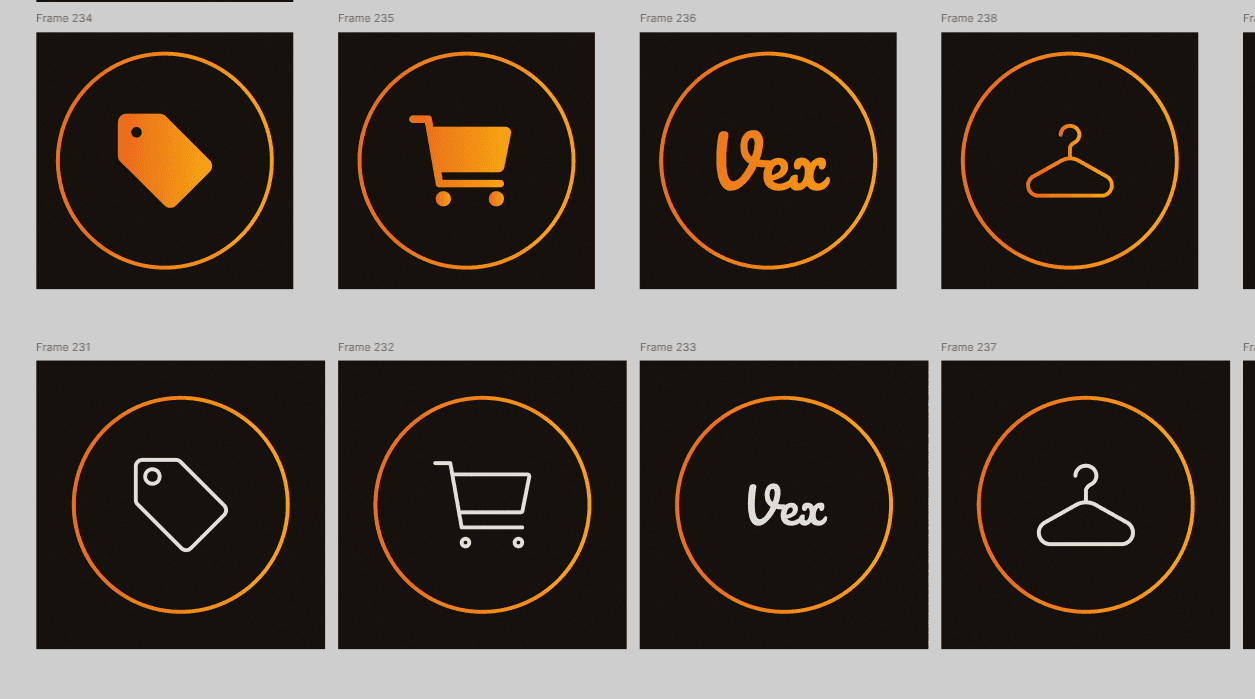
Once the structure was validated, visual design was applied to reinforce the brand strategy defined during the ideation phase. The identity was designed to feel modern, social, and trustworthy, avoiding visual cues associated with informal or low-quality resale experiences.
Typography was selected for clarity and digital readability, while the color palette balanced warmth and confidence to reflect both community and professionalism. Visual elements and spacing were designed to prioritize content, allowing garments and user-generated media to remain the focal point of the experience.
This visual system ensured consistency across screens while supporting scalability and future feature expansion.
Visual Design
4.3 High-Fidelity Mockups – Final Interface Design
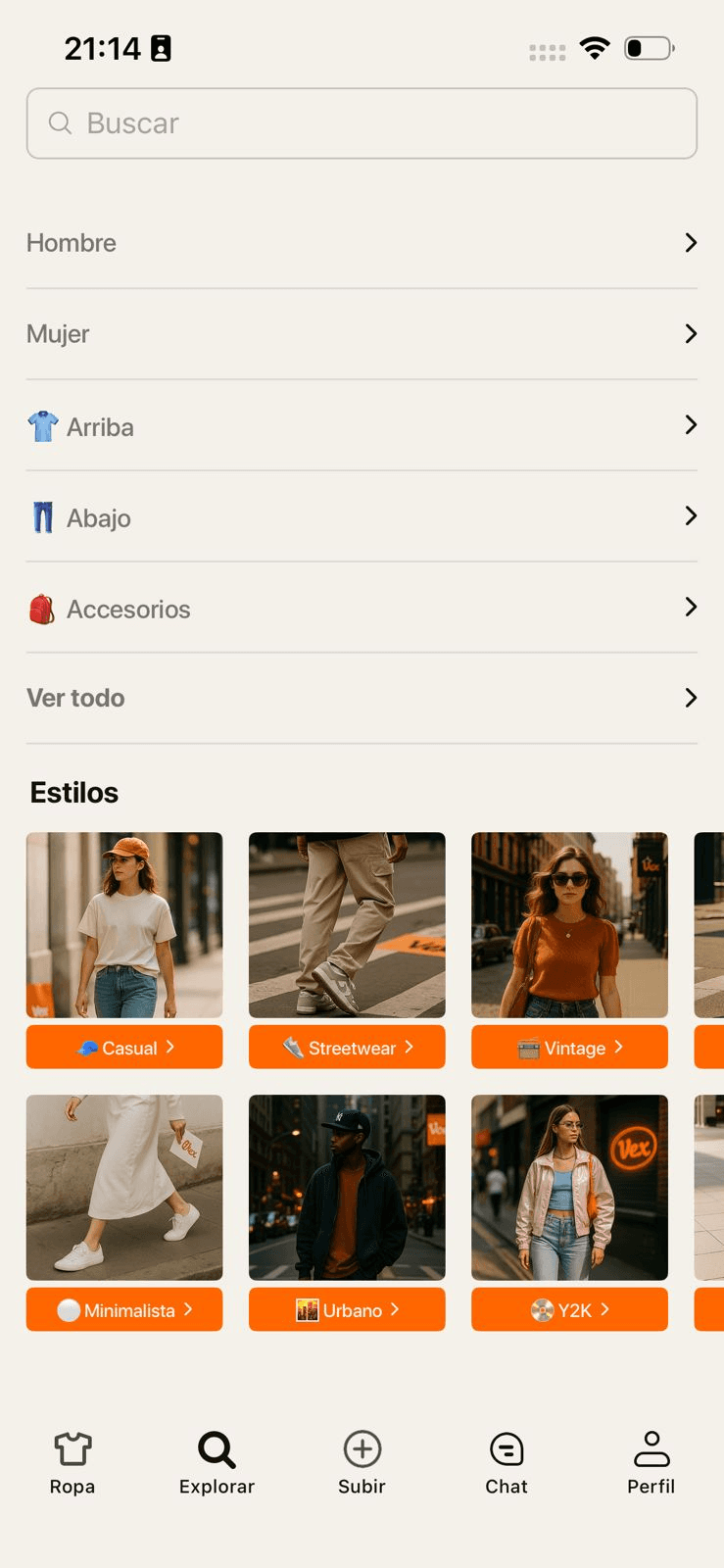
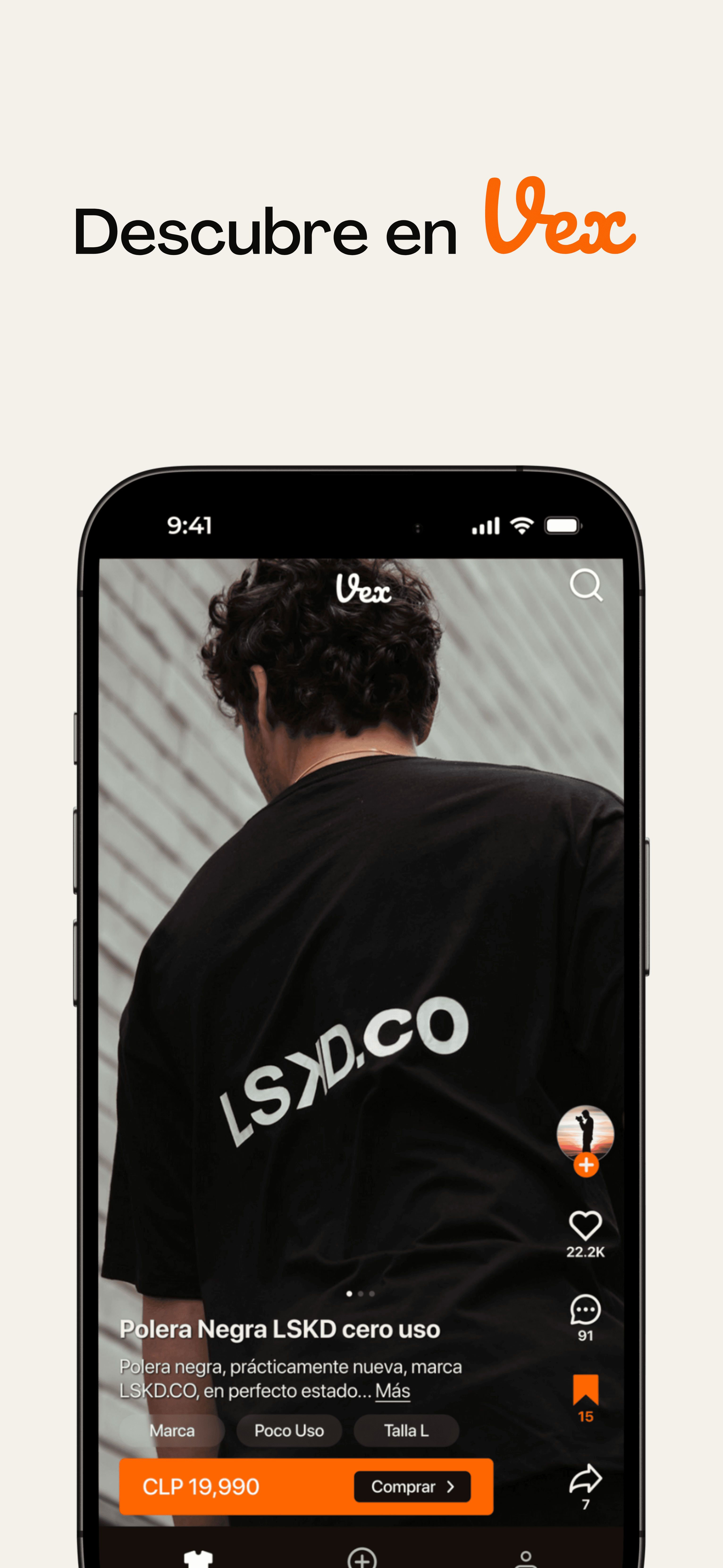
High-fidelity mockups translated wireframes and visual guidelines into fully detailed screens. These mockups defined final layouts, typography usage, color application, iconography, and interaction states.
Special attention was given to key moments such as onboarding, item publishing, and content discovery, ensuring that each screen supported momentum and reduced cognitive effort. The final designs were optimized for mobile-first use, reflecting the primary context in which users interact with Vex.
Mockups
4.4 Usability Tests – Validation with Real Users
Usability testing was conducted to validate design decisions and identify friction points before full-scale implementation. The primary objectives were to assess clarity, ease of use, and user confidence throughout critical flows.
Participants included female users familiar with second-hand fashion, casual sellers, and first-time users with interest in sustainability.
Scenarios tested included completing onboarding, publishing a garment, browsing the feed, and initiating a transaction.
Results showed strong alignment between design intent and user expectations. Users responded positively to the visual experience and speed of interactions, while feedback highlighted opportunities to improve clarity in certain steps and reduce perceived effort in onboarding.
Objective
To validate whether users can understand, navigate, and complete the core flows of Vex with confidence and minimal friction. The test aimed to evaluate clarity, ease of use, and perceived trust during onboarding, item publishing, and content exploration.
Methodology
Moderated usability testing sessions were conducted using a clickable high-fidelity prototype. Participants were asked to complete predefined tasks while thinking aloud, allowing observation of behavior, hesitation points, and emotional responses. Each session concluded with follow-up questions to capture qualitative feedback and overall impressions.
Participants (Type)
Participants included female users familiar with second-hand fashion, casual sellers who occasionally resell clothing online, and first-time users interested in sustainability but not yet active in resale platforms. This mix allowed validation across different experience levels and motivations.
Key Insights
Insight 1 – Visual clarity increases immediate trust
Los artistas sienten que, a pesar de la calidad de su música, su presencia online no refleja su nivel artístico ni genera confianza.
Description
A strong visual hierarchy and social feed format helped users quickly understand what the platform offers, reinforcing credibility early in the experience.
Insight 2 – Onboarding effort directly affects motivation
Several participants showed signs of fatigue during onboarding when asked to make too many decisions upfront. While they understood the purpose, the perceived effort reduced initial excitement.
Description
Simplifying early steps and postponing detailed preferences increased completion rates and preserved momentum toward first interaction.
Insight 1 - Calidad v/s Visibilidad
Los artistas sienten que, a pesar de la calidad de su música, su presencia online no refleja su nivel artístico ni genera confianza.
Description
The faster users could complete meaningful actions, the more they perceived Vex as a viable alternative to informal resale workflows.
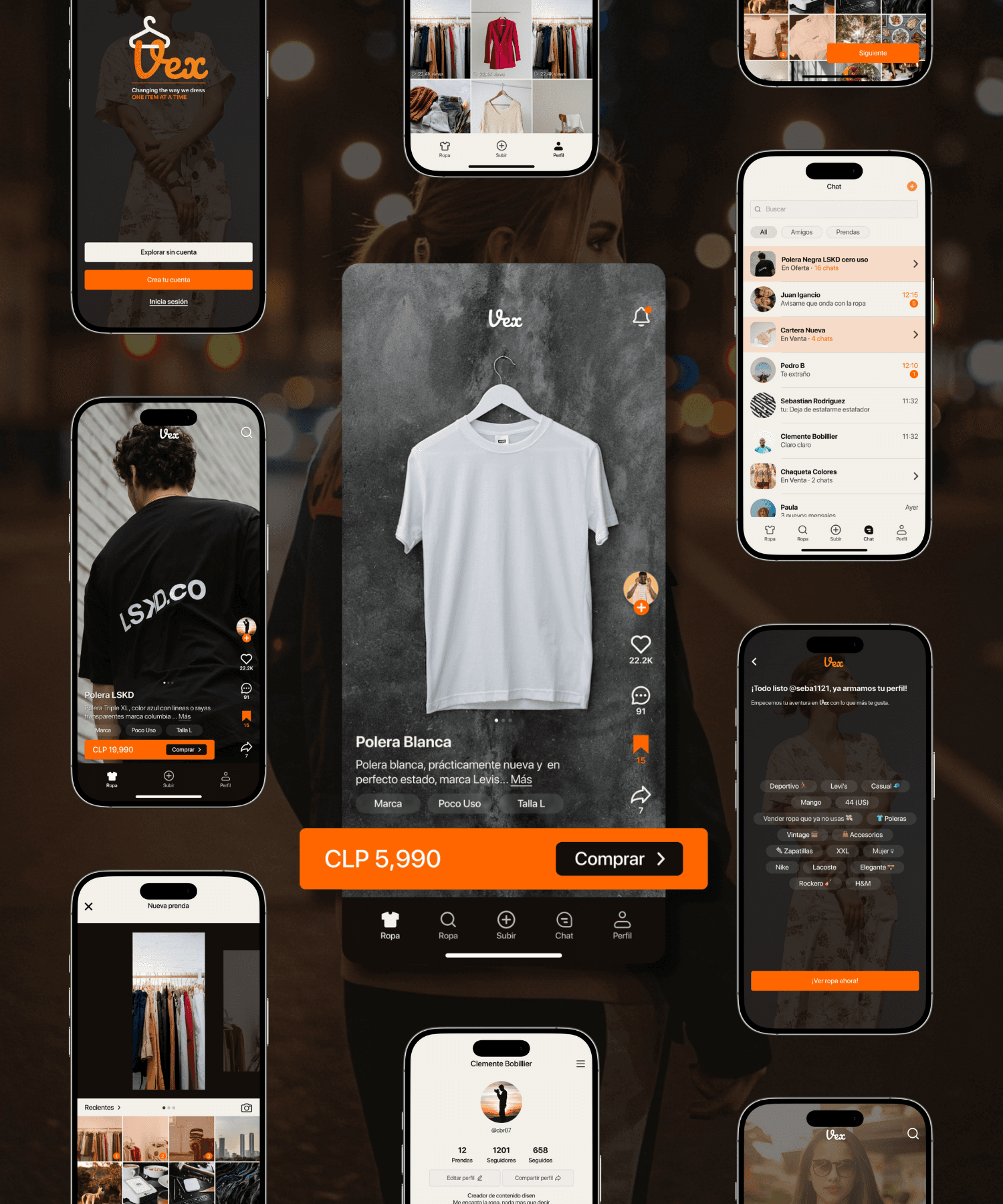
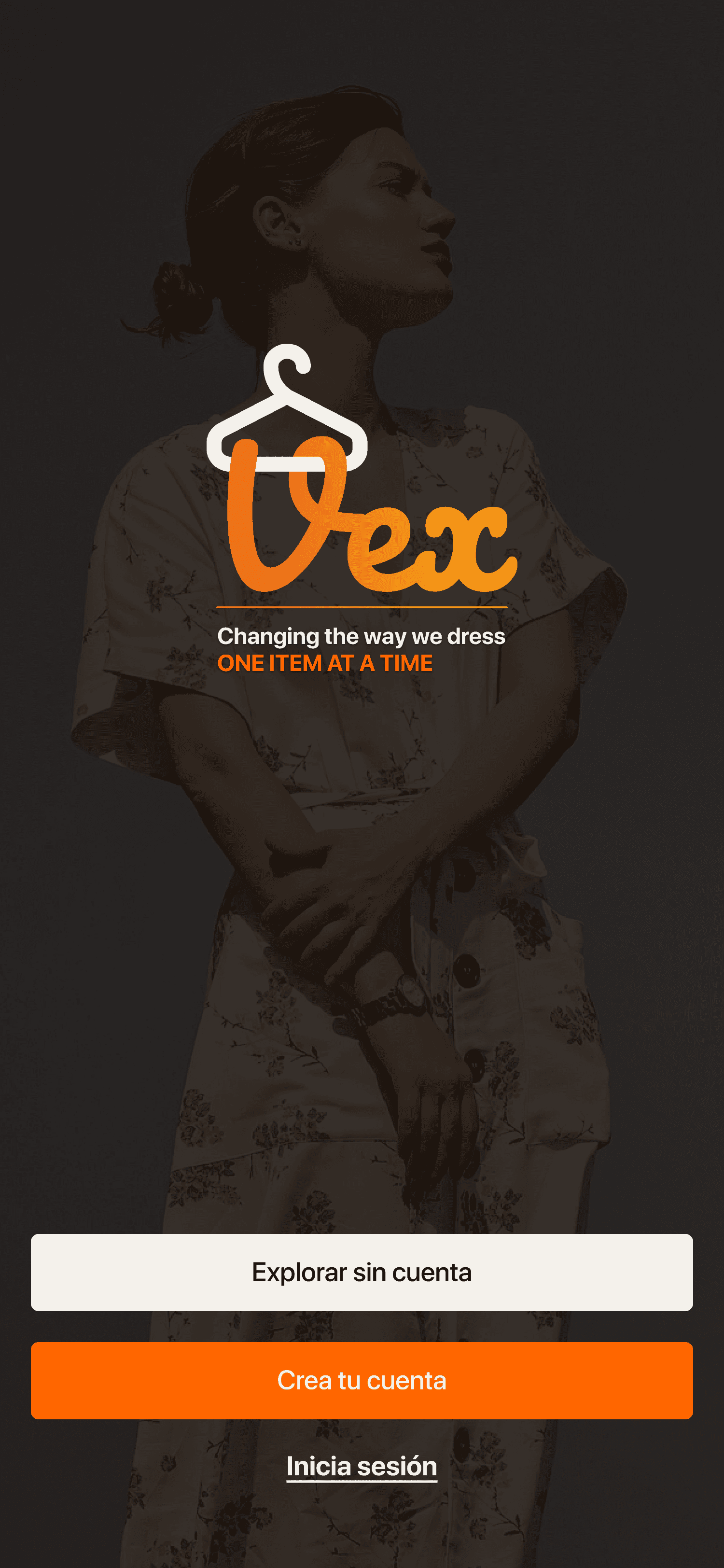
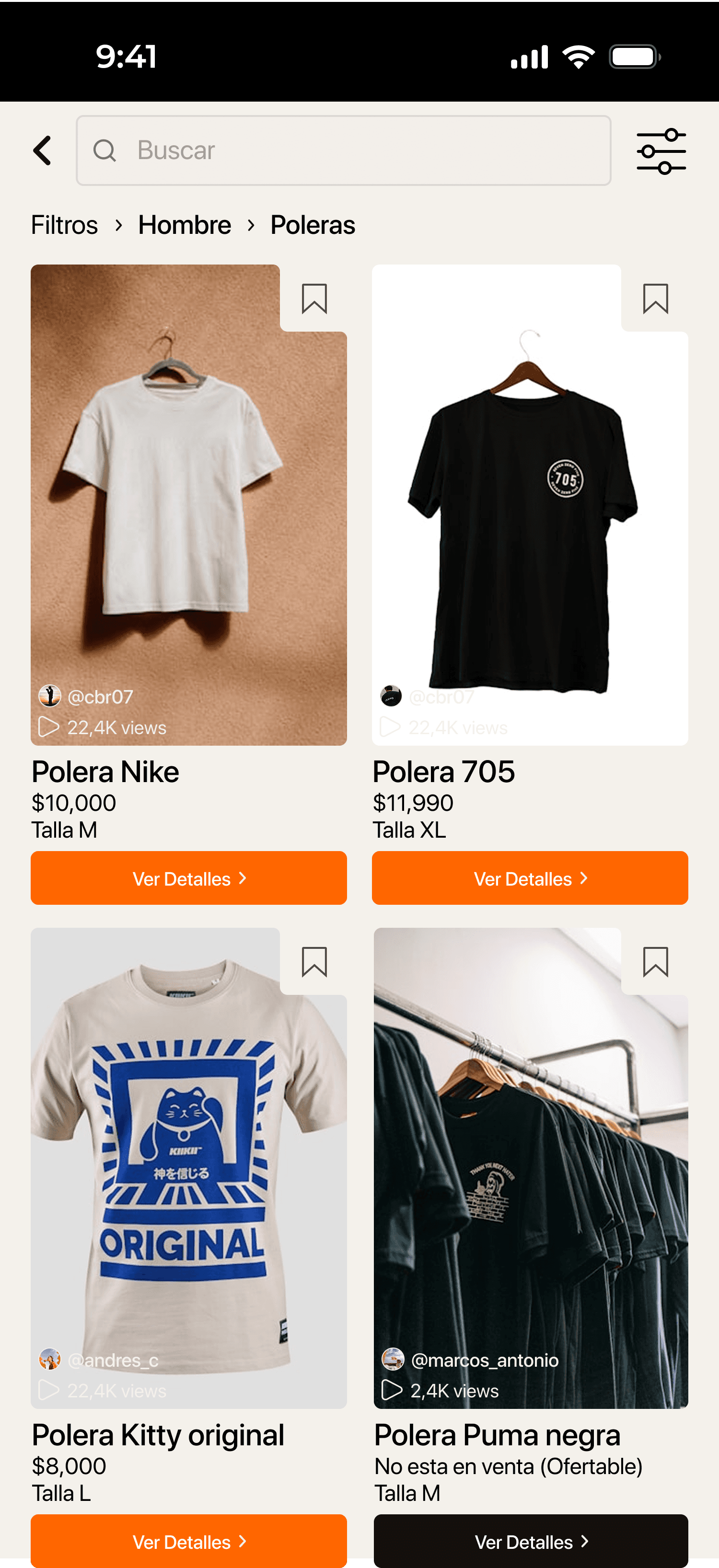
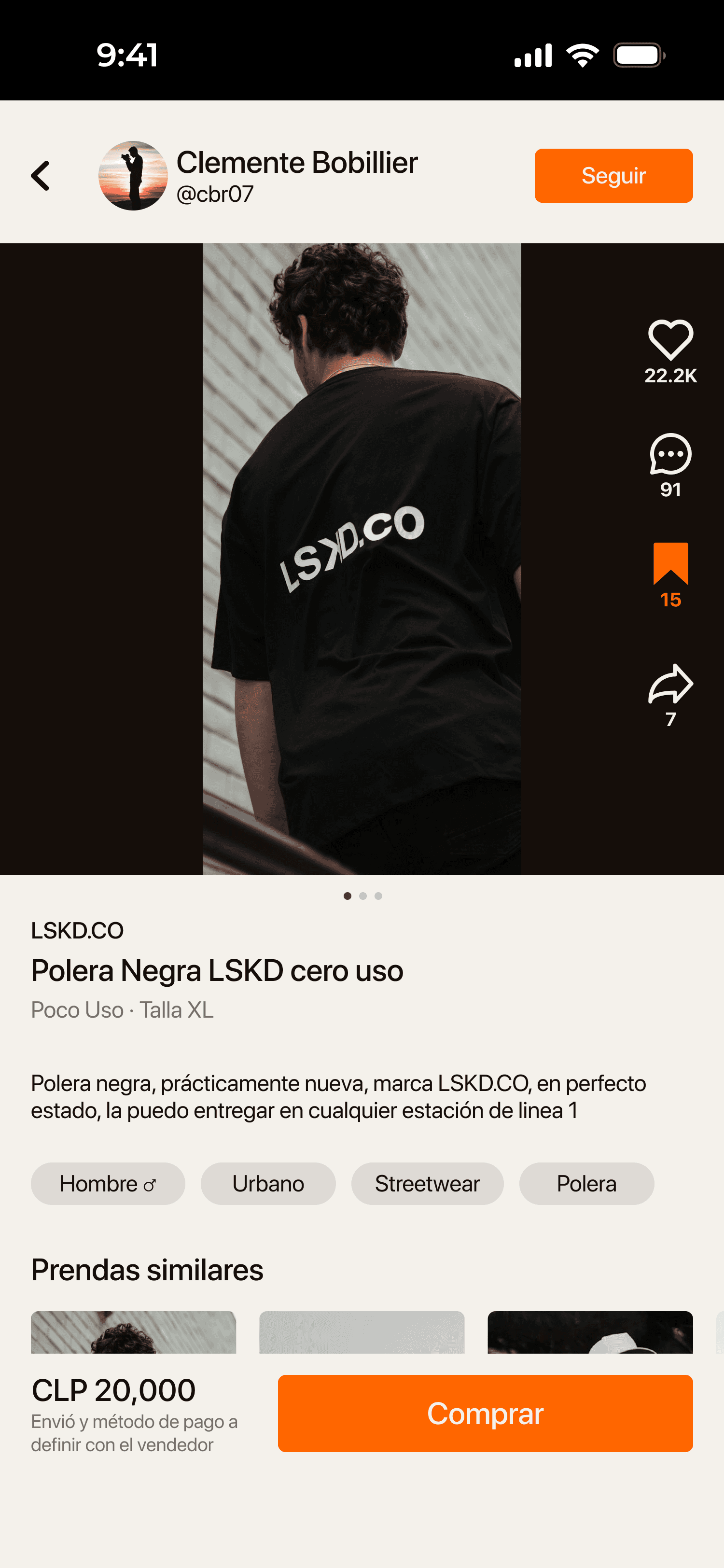
5.1 Pantallas finales
5.2 Vex Clothes The App
Vex is an AI-powered social marketplace that transforms the cold, fragmented secondhand market into an engaging, viral experience. By combining a C2C platform with video-first social discovery, we enable users to list items in seconds and build a community around sustainable style. Currently live with over 1,000 users, Vex is proving that circular fashion can be scalable, trusted, and effortless.
6.1 The Power of Lean Startup & Speed
One of the harshest but most valuable lessons was learning that speed is a feature. In the early days, we spent too much time debating perfect pixel placement. However, applying Lean Startup methodologies taught us that shipping a "good enough" feature to get real user feedback is infinitely more valuable than perfecting a prototype in isolation. I learned to trade perfectionism for iteration, understanding that in a startup, the only validation that matters comes from live users, not design critiques.
6.2 The Designer-CTO Synergy
Vex succeeded because design and engineering were never siloed. Working side-by-side with a talented CTO taught me to design with technical feasibility in mind. Instead of handing off static screens, we co-created components. I learned to speak the language of developers—understanding database structures and API limitations—which allowed us to build a complex marketplace faster and with fewer bugs. This synergy proved that the best product decisions happen when Design and Tech sit at the same table from Day 1.
6.3 Trust is the Ultimate UX Feature
We initially thought Vex's main value would be "cool fashion." We were wrong. The data showed that users didn't leave the app because of aesthetics; they left because of uncertainty. We realized that in a peer-to-peer marketplace, trust is the product. We pivoted our roadmap to prioritize safety features—verified profiles, escrow payments, and rating systems—over flashy UI animations. This taught me that good UX isn't just about usability; it's about reducing anxiety and building a safe environment for transactions.
6.4 Navigating the "Cold Start" Problem
Building a two-sided marketplace (buyers vs. sellers) is notoriously difficult. A key strategic lesson was solving the "chicken and egg" problem. We focused our design efforts on the Supply Side (Sellers) first, creating effortless listing tools to populate the app with inventory. By making it incredibly easy to sell, buyers naturally followed. This experience deepened my understanding of Growth Design—using product mechanics not just to delight users, but to solve fundamental business challenges.
Have an Idea?
Let’s build something great
I’m open to Product Design roles and Design roles in early-stage startups.
If you’re building something ambitious, let’s talk.
Santiago, Chile.