Case study · EdBinder and Miss Berni · Feb 2025 – Jan 2026
EdBinder
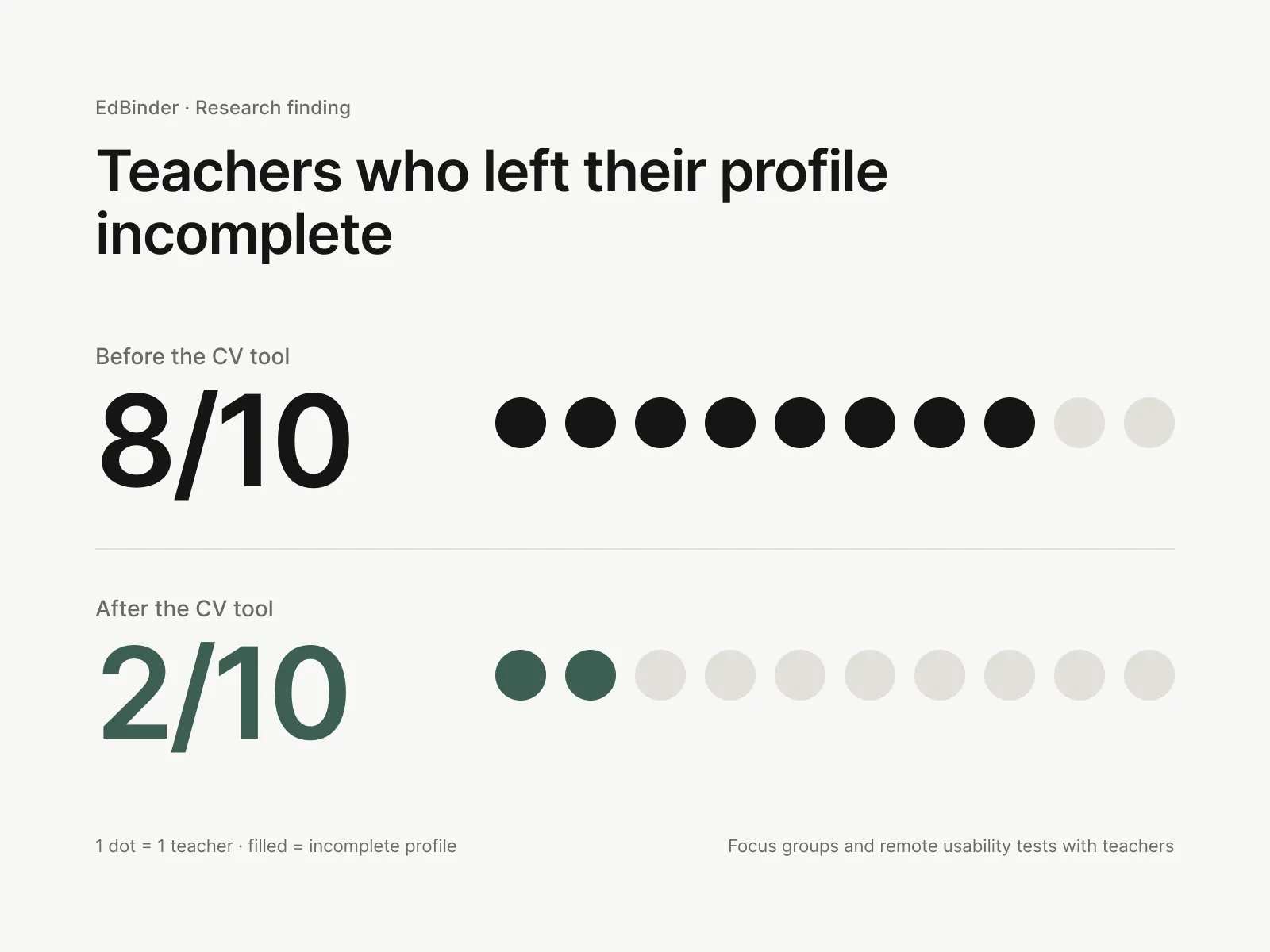
A platform that places bilingual Latin American teachers in US schools. I designed an AI-assisted CV tool, and incomplete teacher profiles dropped from 8 in 10 to 2 in 10.
- 8 → 2 in 10teachers leaving their profile incomplete, before and after
- 3,000+teachers on the platform
- 3 focus groupswith more than 10 teachers each
Context
EdBinder and Miss Berni bring bilingual teachers from Latin America to work in schools in the United States. EdBinder is the software; Miss Berni is the recruitment agency behind it.
The platform operates across Latin America, Europe and the United States and has more than 3,000 teachers. A teacher’s profile is their application: schools and recruiters decide from it. An incomplete profile is a teacher who never reaches an interview.
Before the redesign, teachers uploaded a PDF of their CV and the platform filled in a few fields from it. Everything else had to be typed by hand, and most teachers stopped before finishing.
My role
I was the only designer on the product for most of the year, working directly with the CEO and a developer. In the final three months a second designer joined and helped with the websites.
- Designed the CV tool, from research to handoff.
- Redesigned the platform interface, including the teacher profile.
- Designed EdBinder’s landing page, end to end.
- Ran focus groups and remote usability tests with teachers.
Research with teachers
I ran three focus groups, each with more than ten different teachers, and several remote usability tests on the existing platform.
Key decisions
Decision 01
Let the CV fill the profile, not the teacher
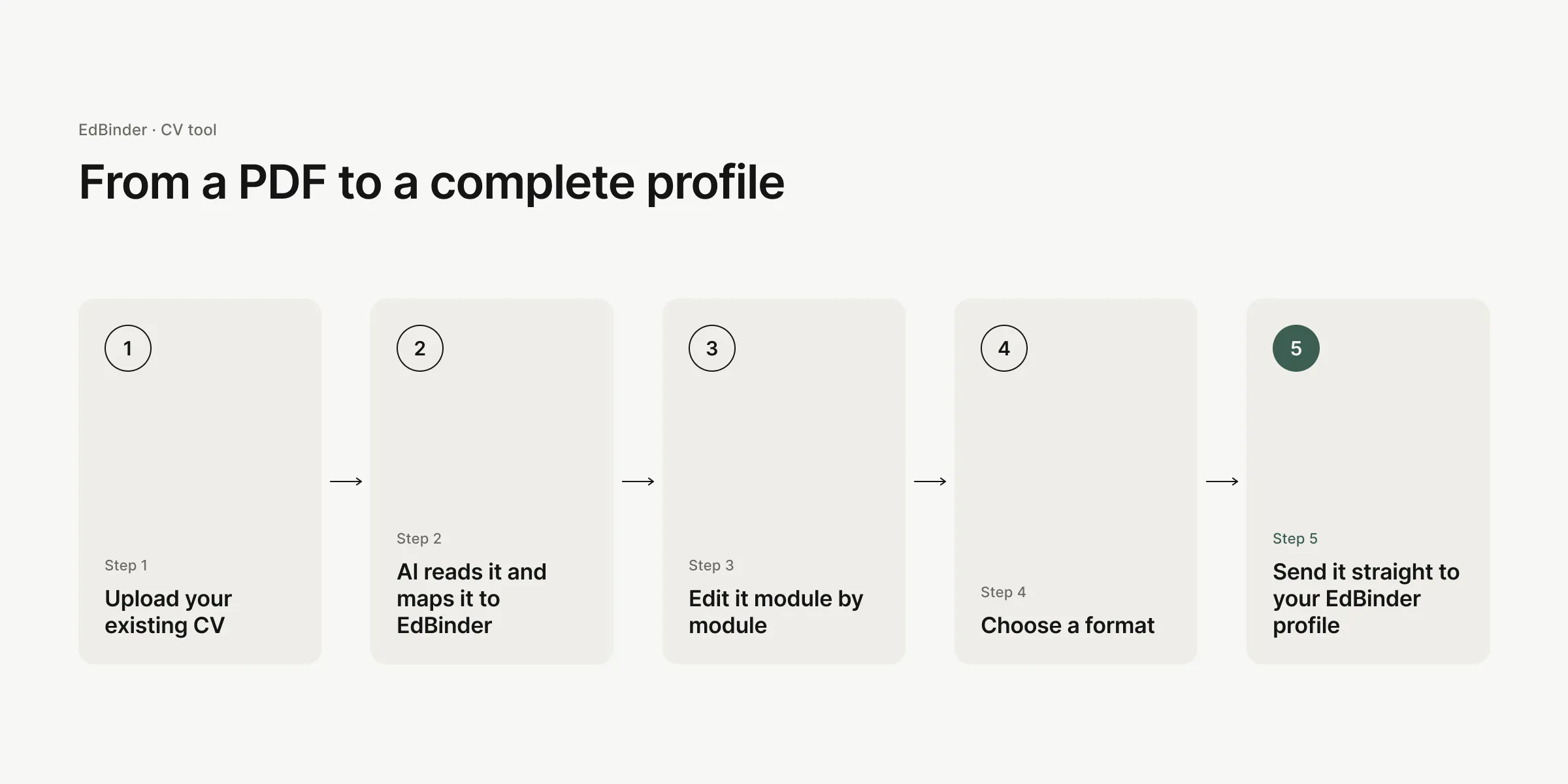
Teachers already had a CV. Instead of asking them to copy it into a form, the new tool uses AI to read their existing CV and map it to EdBinder’s profile. Everything is filled in except videos, which teachers still add themselves.
The teacher’s job changes from typing to reviewing.
Decision 02
Edit by module, then choose a format
AI gets most of a CV right, but not all of it. Teachers review and edit their CV one module at a time (experience, education, languages) instead of facing one long form, then choose a format and send it straight to their EdBinder profile.
Decision 03
One CV first, several later
We considered letting teachers upload several PDFs in the first version. It would have helped some teachers, but it wasn’t needed to fix incomplete profiles, and it added complexity to every step. We left it for version two.
Decision 04
A block layout that presents the teacher
The profile is what a school sees. I modernised the interface and moved the profile to a block layout, so each part of a teacher’s experience reads on its own and the whole profile presents better to schools and recruiters.
The landing page
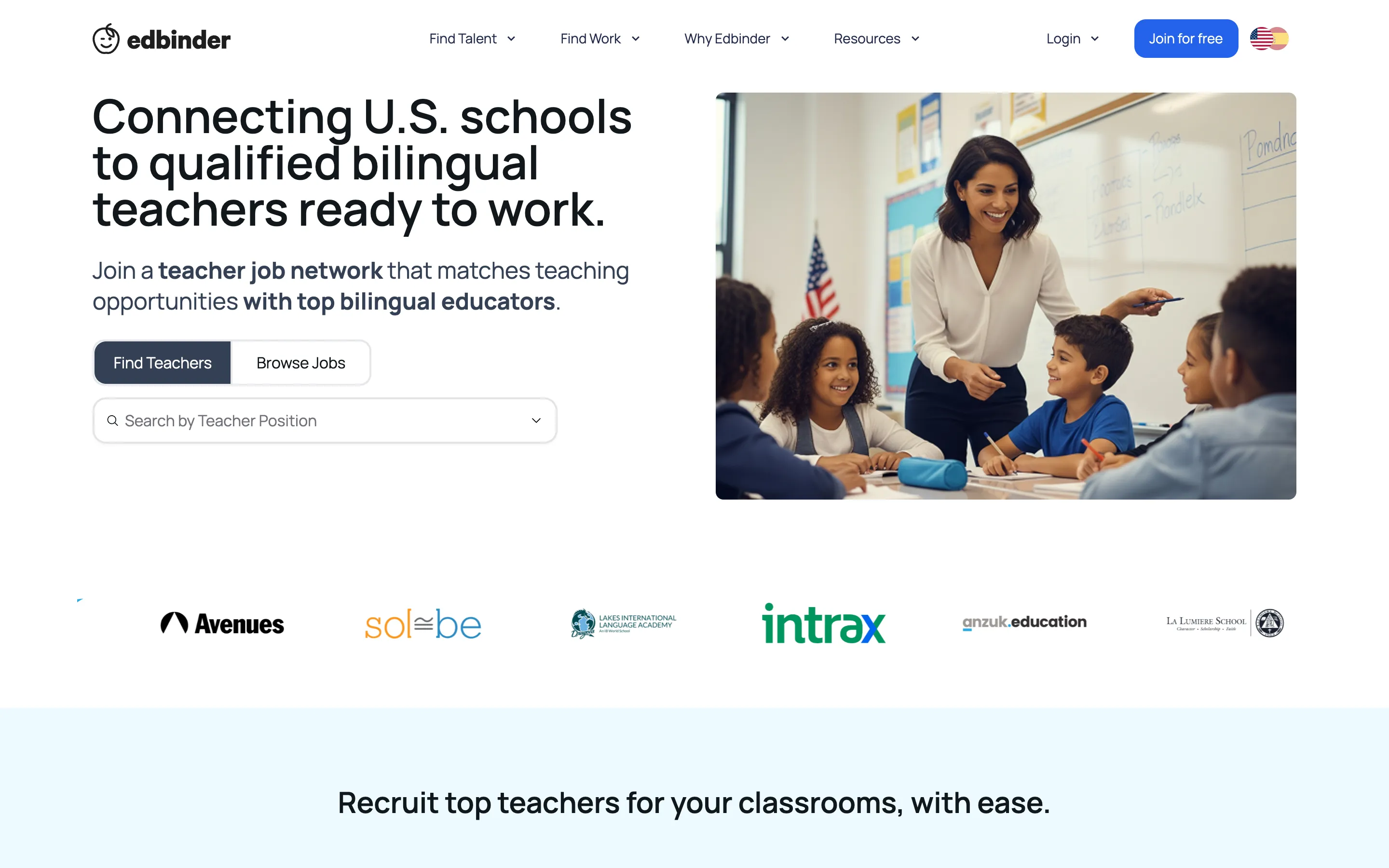
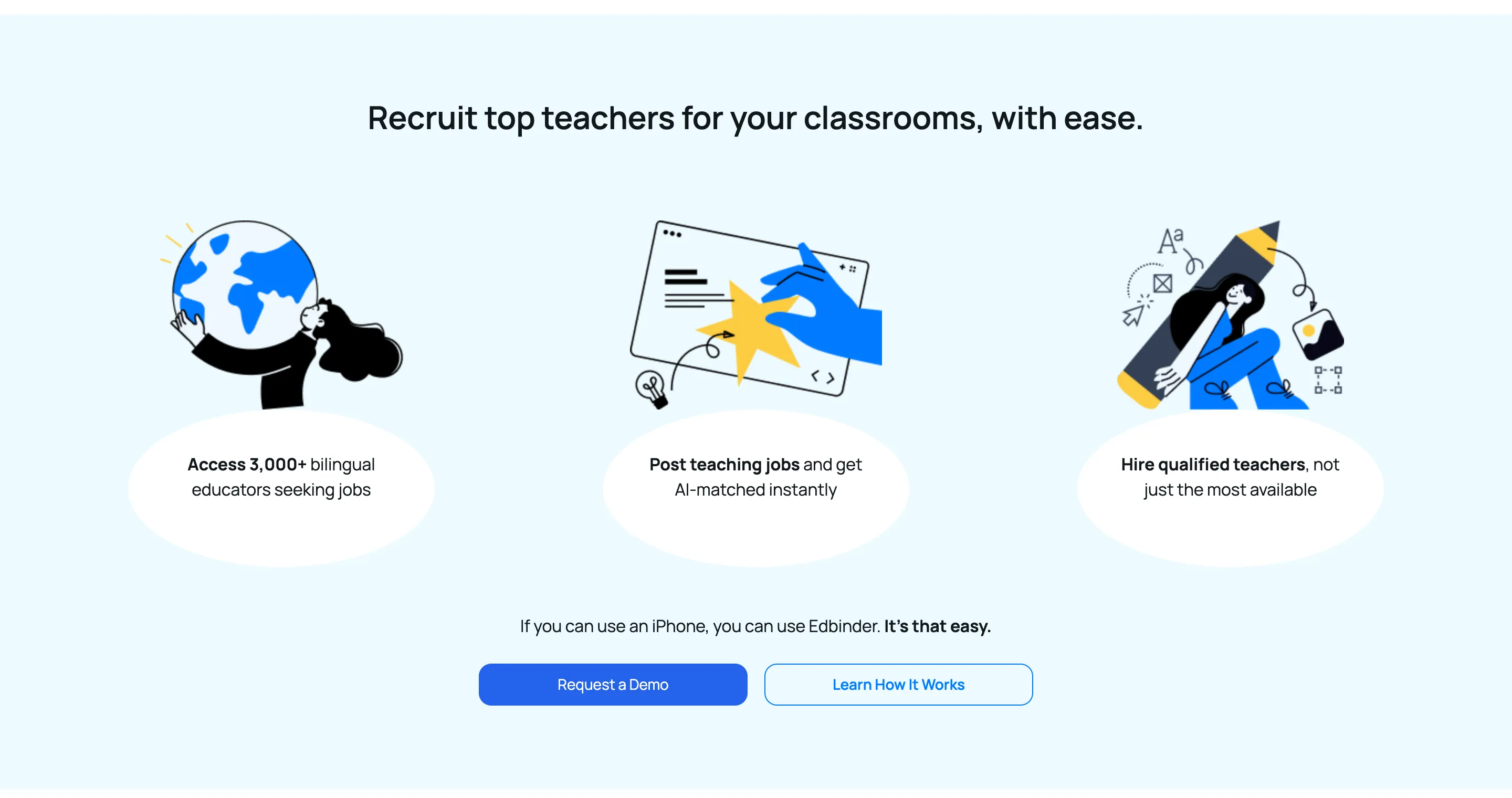
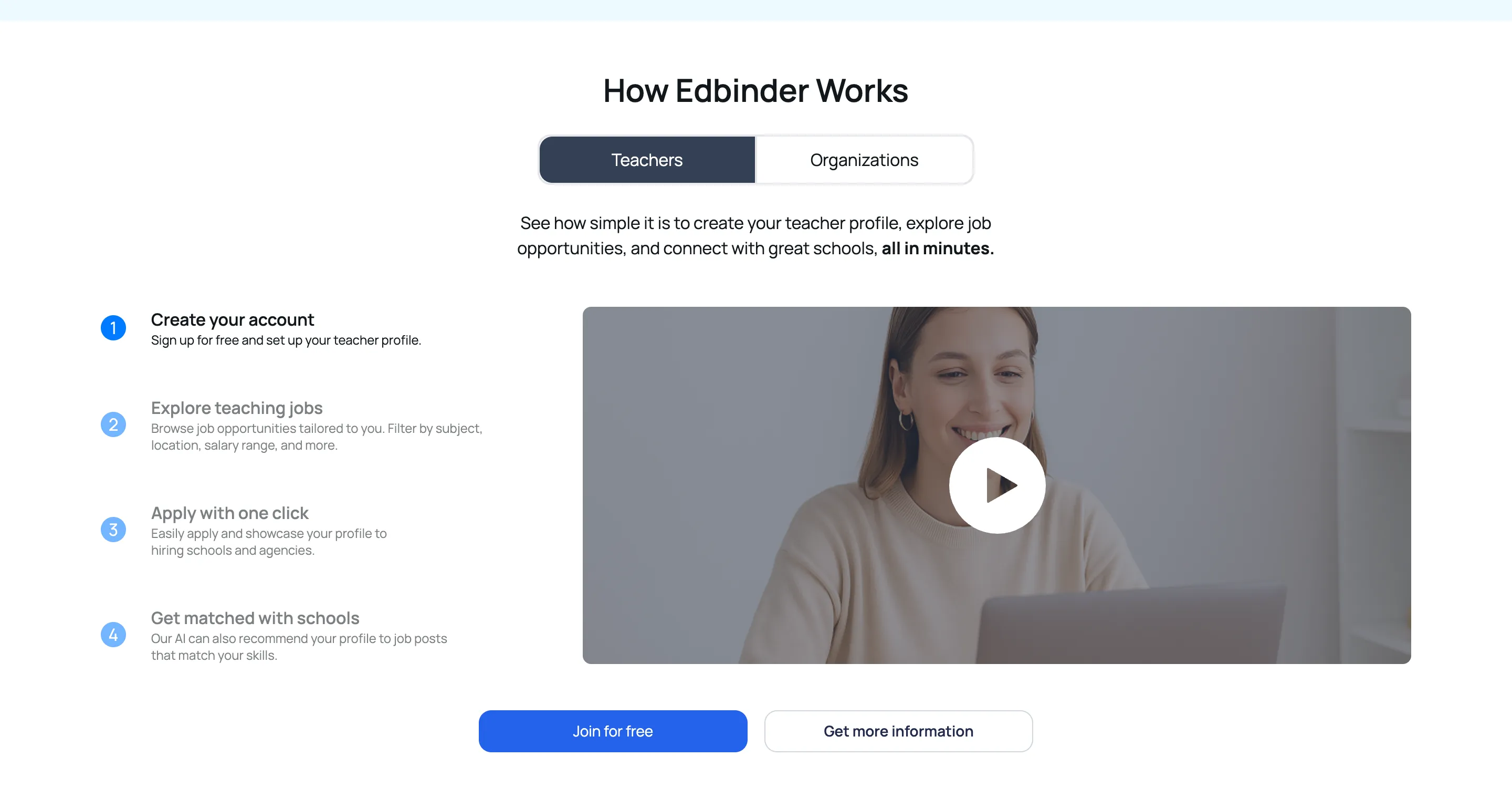
I also designed EdBinder’s landing page from start to finish. It speaks to two audiences at once: US schools looking for bilingual teachers, and teachers looking for work. The first screen lets each one choose their path (find teachers or browse jobs), and the rest of the page explains how the platform works for each side.
Outcome
The CV tool launched in late 2025.
- Teachers leaving their profile incomplete went from 8 in 10 to 2 in 10.
- Profiles now arrive complete and in a consistent format, which makes them easier for schools and recruiters to compare.
What I learned
- Working directly with a CEO teaches you the business. Prioritisation, scope and trade-offs were decided in the same conversation as the design. I learned how a startup actually makes decisions.
- Remove work before you polish it. The biggest improvement didn’t come from a better form. It came from not needing the form.
- What I’d do differently: get more involved in the company’s internal processes, like how the recruitment team reviewed profiles and placed teachers. I designed for teachers; I could have learned more from the people on the other side.