Case study · TurboShop · Feb 2026 – present
Fórmula
A workshop management platform mechanics use every day. I lead its design and built its frontend, and parts ordering went from over an hour to under 30 minutes.
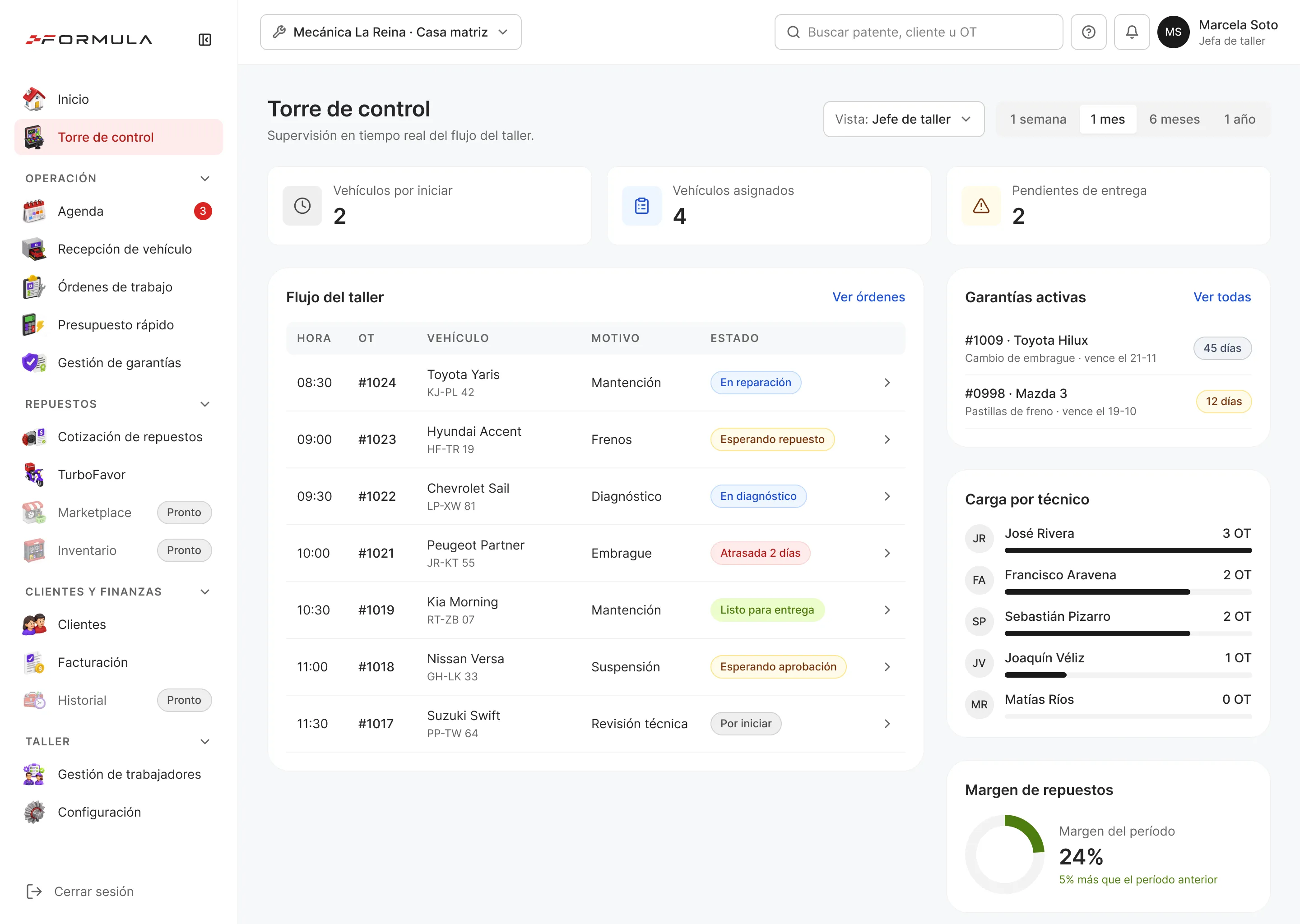
- < 30 minto order parts, down from over an hour
- < 1 minvehicle intake with licence-plate autofill
- 11modules in daily use in four workshops
- 15+workshops using the parts quotation module
Context
TurboShop is digitising car repair in Chile. It started by delivering auto parts to mechanic workshops in under 90 minutes. Fórmula is its next step: software to run the workshop itself.
Mechanics manage their work between the car and the counter. A workshop has to receive vehicles, quote jobs, order parts, schedule work and keep track of customers and staff, often with paper, phone calls and chat threads. Fórmula brings that work into one platform with 11 modules.
Until 2026 the product was built by engineers alone. I joined as Head of Design to set up the design function and lead Fórmula’s experience end to end.
My role
I lead a team of two designers, report to the CTO and define product flows directly with the CEO. On Fórmula I did two jobs at once:
- Design lead. I set the direction, reviewed the work and guided each iteration with workshop visits and daily reviews of real sessions in PostHog.
- Frontend builder. I designed and built Fórmula’s frontend together with a backend developer. The person reading the session recordings could also change the interface.
The problem
The slowest part of a workshop’s day was ordering parts. Ordering the parts for a single job could take more than an hour. That is an hour a mechanic is not working on a car, and a customer waiting longer for a quote.
Key decisions
Decision 01
Rebuild parts ordering around timed tests
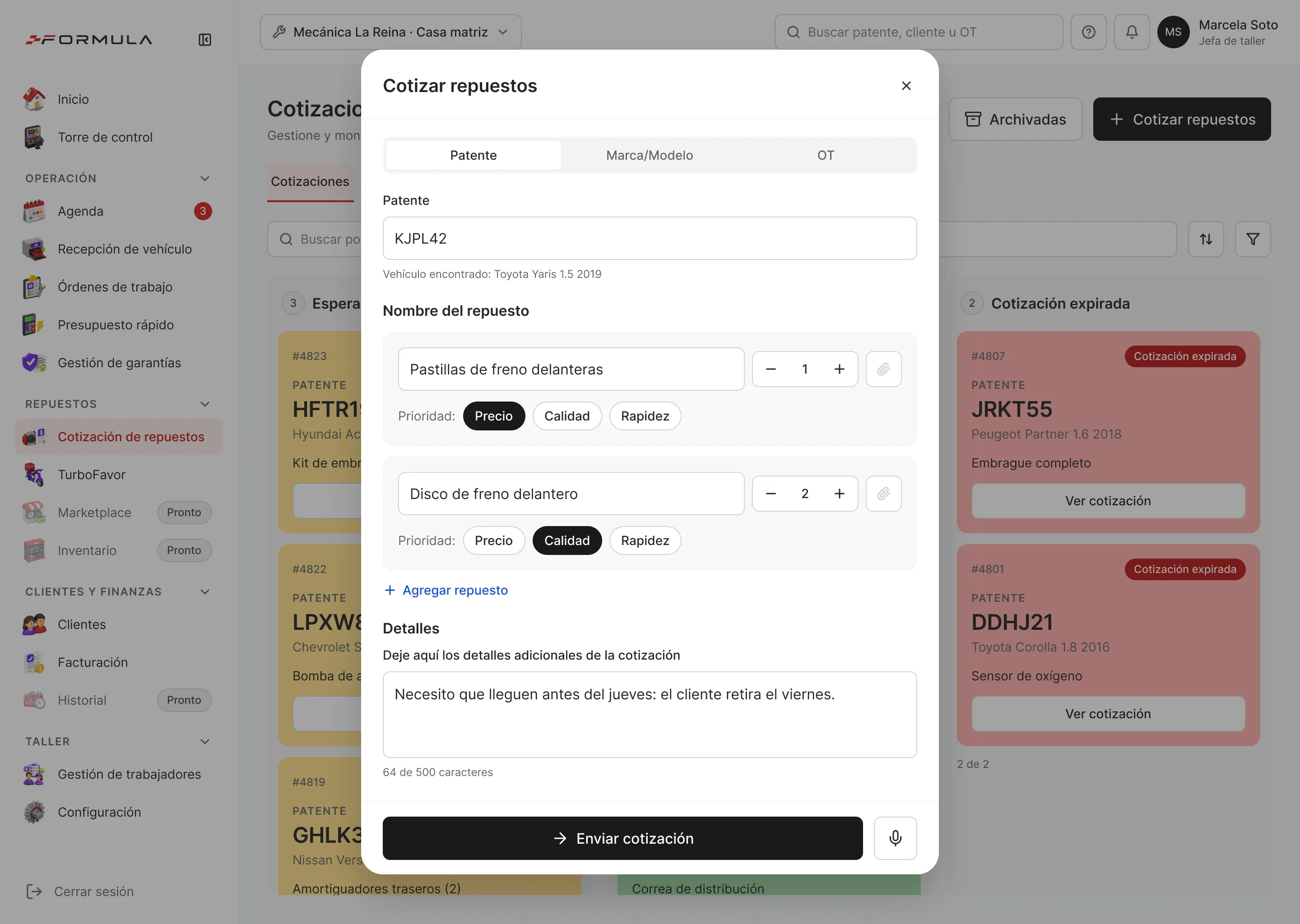
Instead of asking mechanics whether the new flow felt better, we timed them. We ran timed tests with more than five mechanics and iterated until the same task went from over an hour to under 30 minutes.
Timing turned opinions into a shared number that the CEO, engineering and the design team could all work toward.
The time didn’t come from a faster screen. It came from changing how the conversation happened. Ordering a part used to be a chain of messages: the workshop asked TurboShop’s sales team for parts, and sales asked suppliers for prices and stock, each step by phone or chat.
We moved that chain into Fórmula with a built-in quotation tool. The workshop requests parts from the job itself, sales quotes them with supplier prices in the same place, and the quote comes back to the workshop inside the platform. No more waiting on a message thread to move.
Decision 02
Two ways to register a vehicle, not one
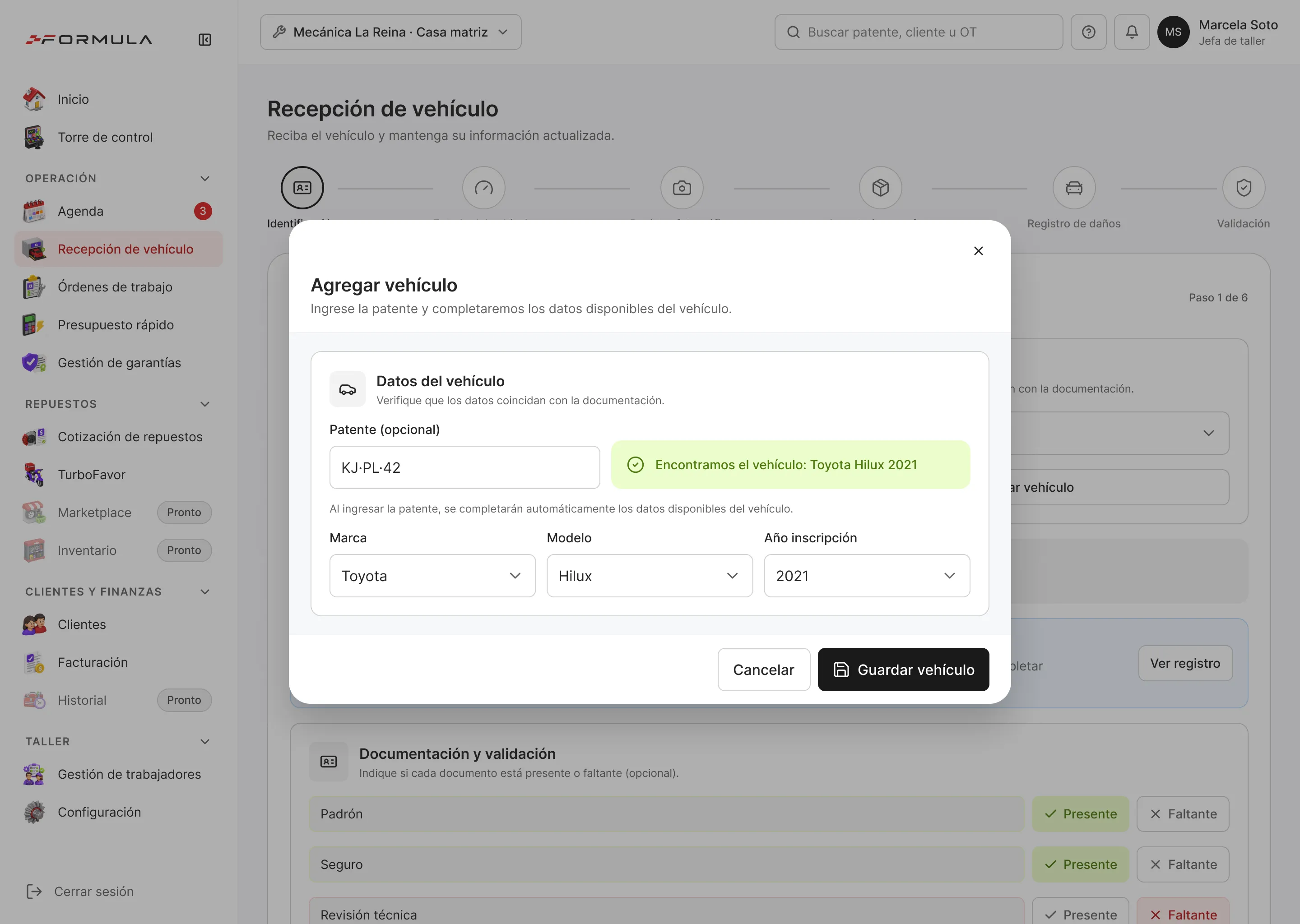
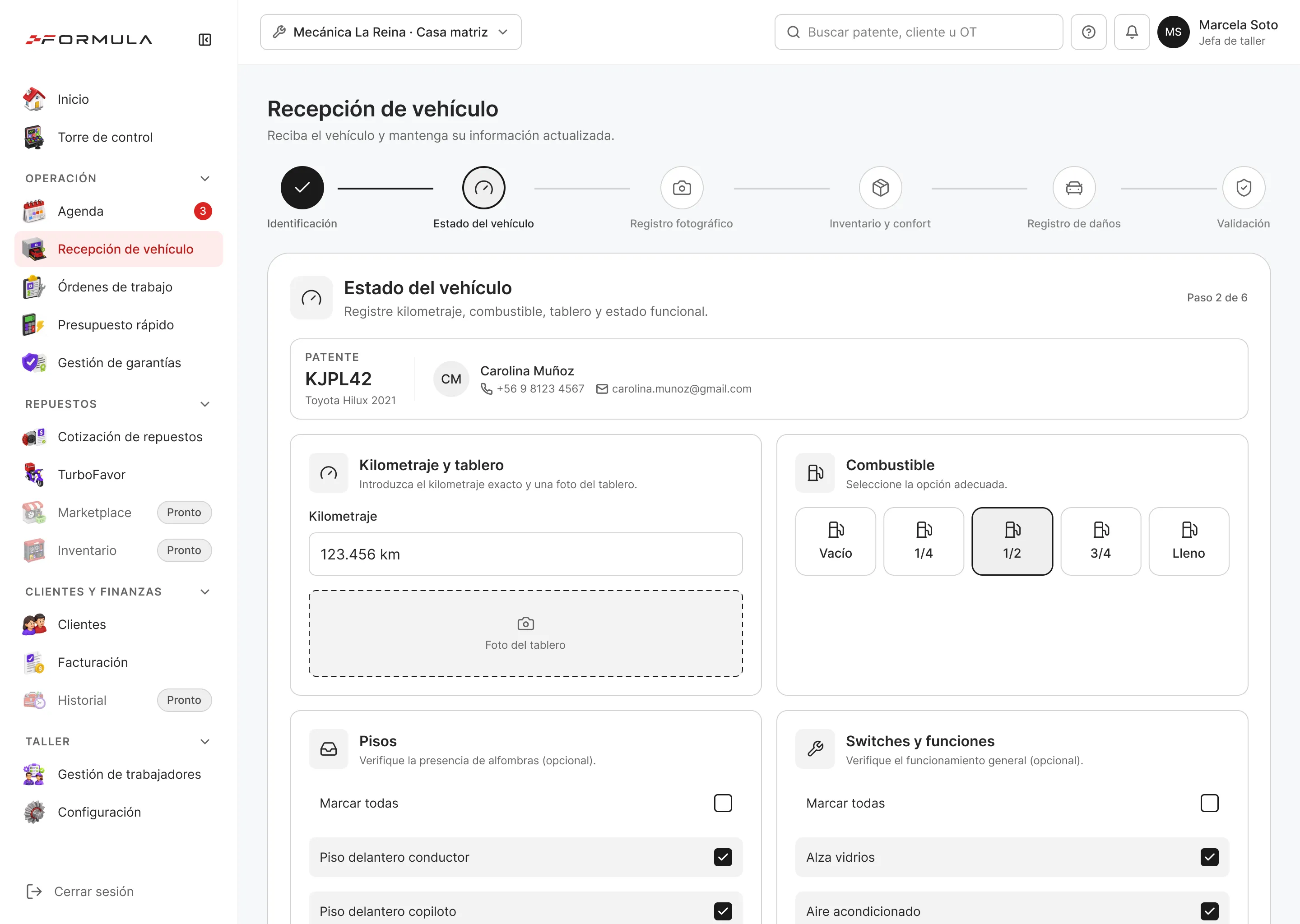
Vehicle intake is the first thing a workshop does with every car. A complete intake collects a lot of information, but the counter often needs to start the job quickly.
I designed a quick intake with licence-plate autofill next to the detailed option. In timed tests the quick intake took under one minute, against five minutes for the detailed form. The detailed form stays for when the job needs it.
Decision 03
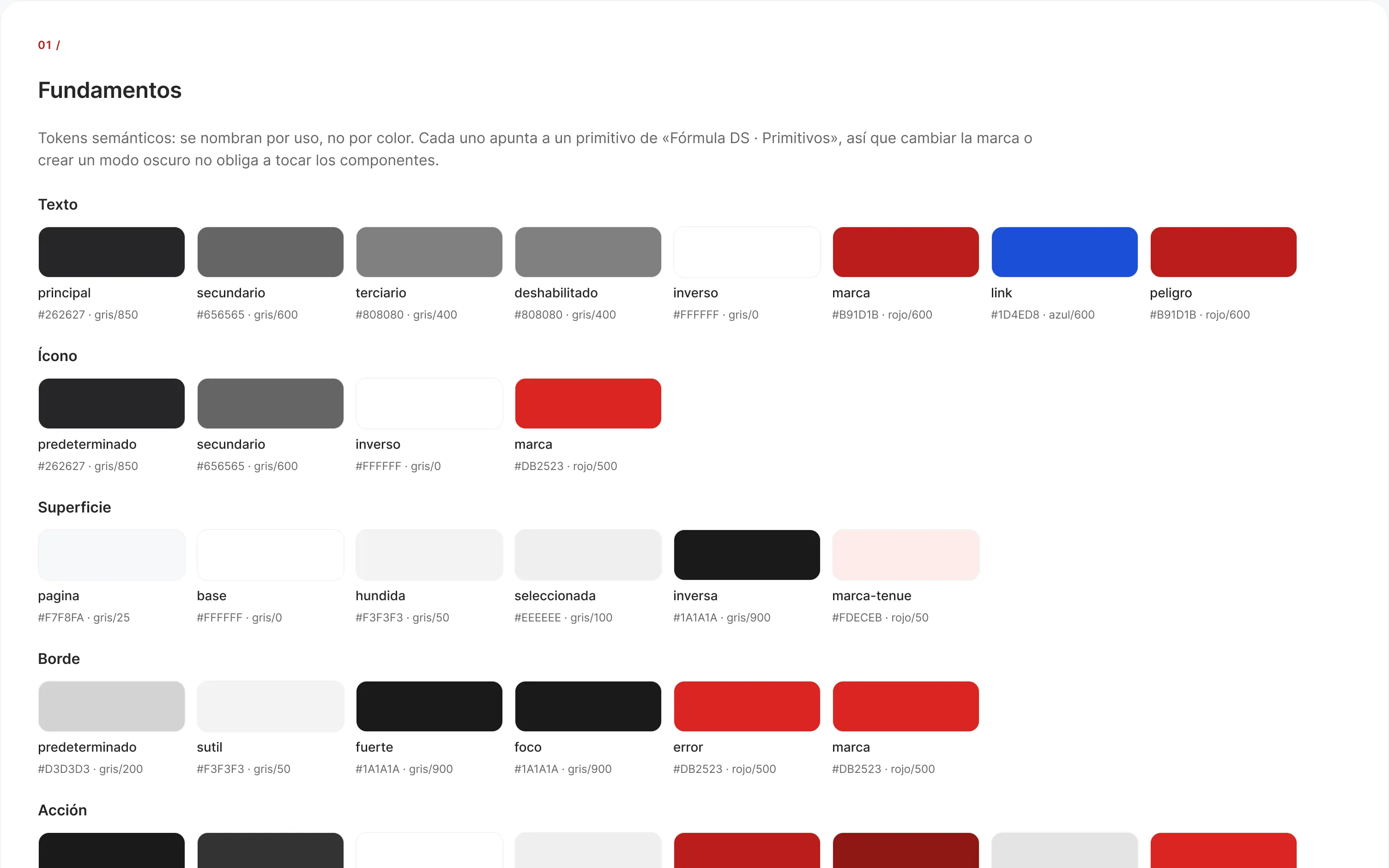
Ship the design system before the next modules
With 11 modules and a growing team, consistency could not depend on one person reviewing every screen. In August 2026 we released Fórmula’s Figma design system, a brand symbol and a visual refactor of the product.
The team then used the system to prototype the next modules (scheduling, customer management and staff management) without starting from a blank page.
Decision 04
Let design reach production directly
Because I built the frontend, a problem spotted in a PostHog session could go straight into the code, without a long handoff. Design reviews happened on the real product, not only on Figma files.
Outcome
Fórmula is used every day by mechanics:
- Parts ordering went from over an hour to under 30 minutes, validated in timed tests with 5+ mechanics.
- Vehicle intake takes under one minute with licence-plate autofill.
- 11 modules are in use in four workshops, and more than 15 workshops use the parts quotation module.
- The design system now lets designers prototype new modules quickly.
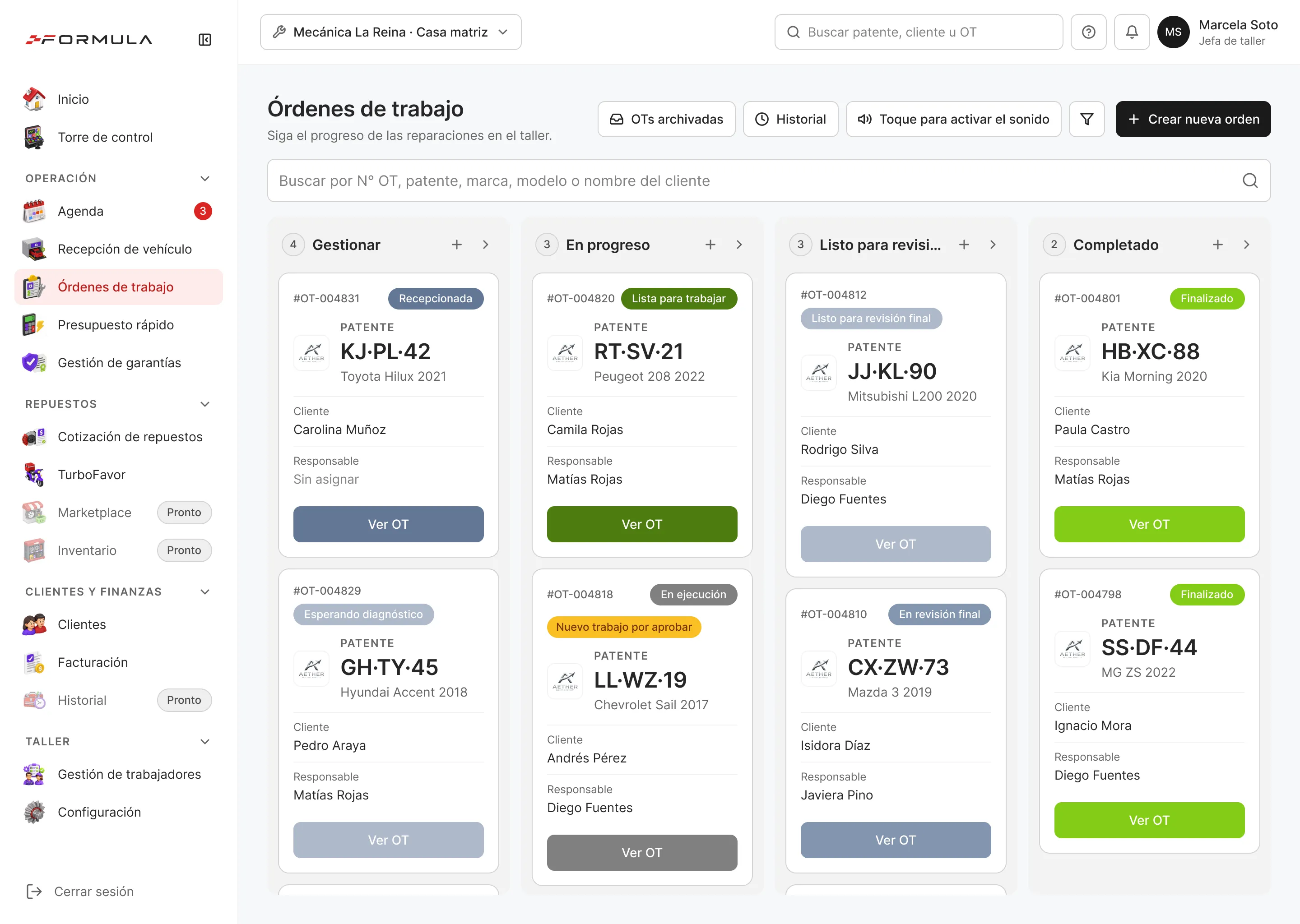
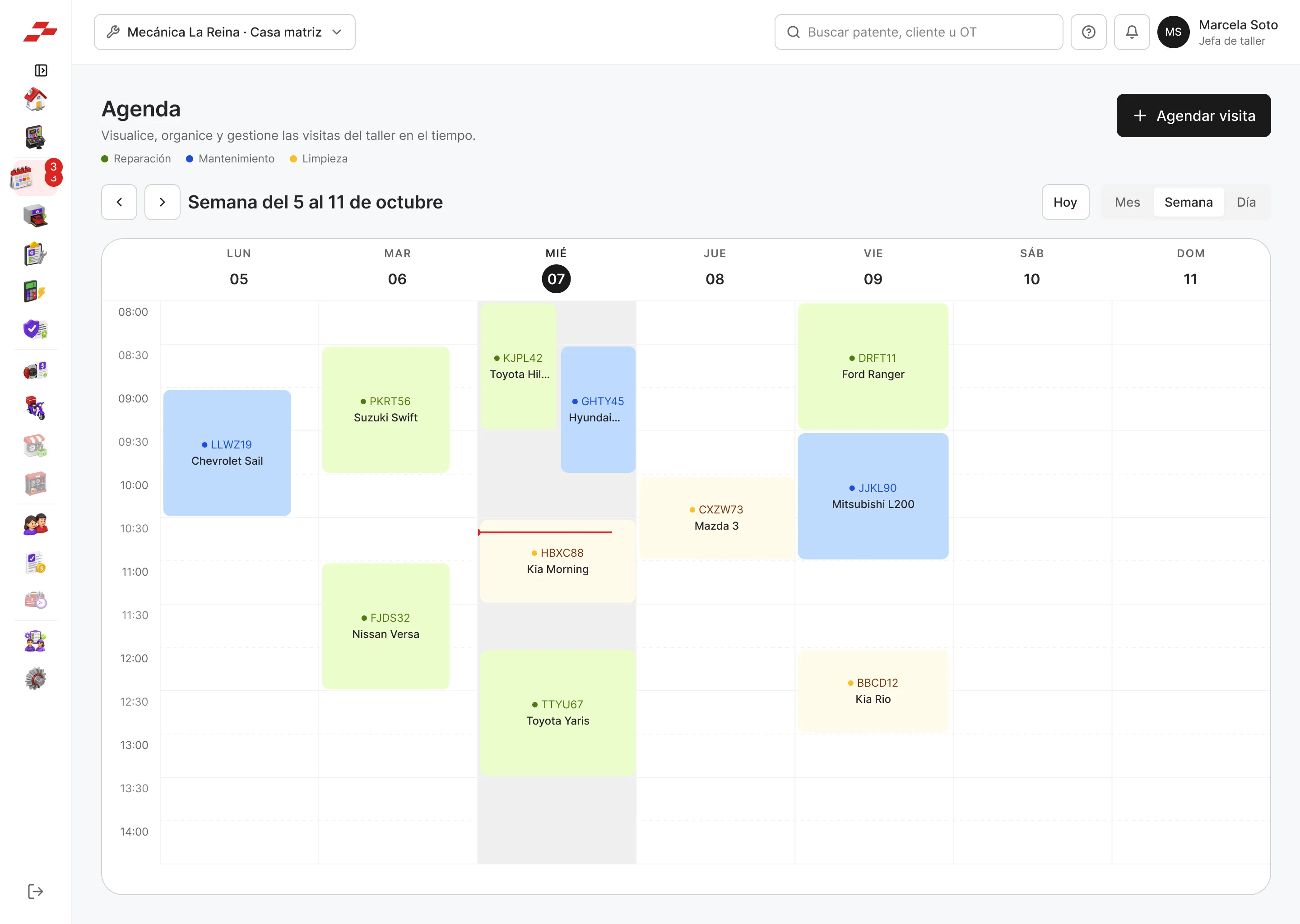
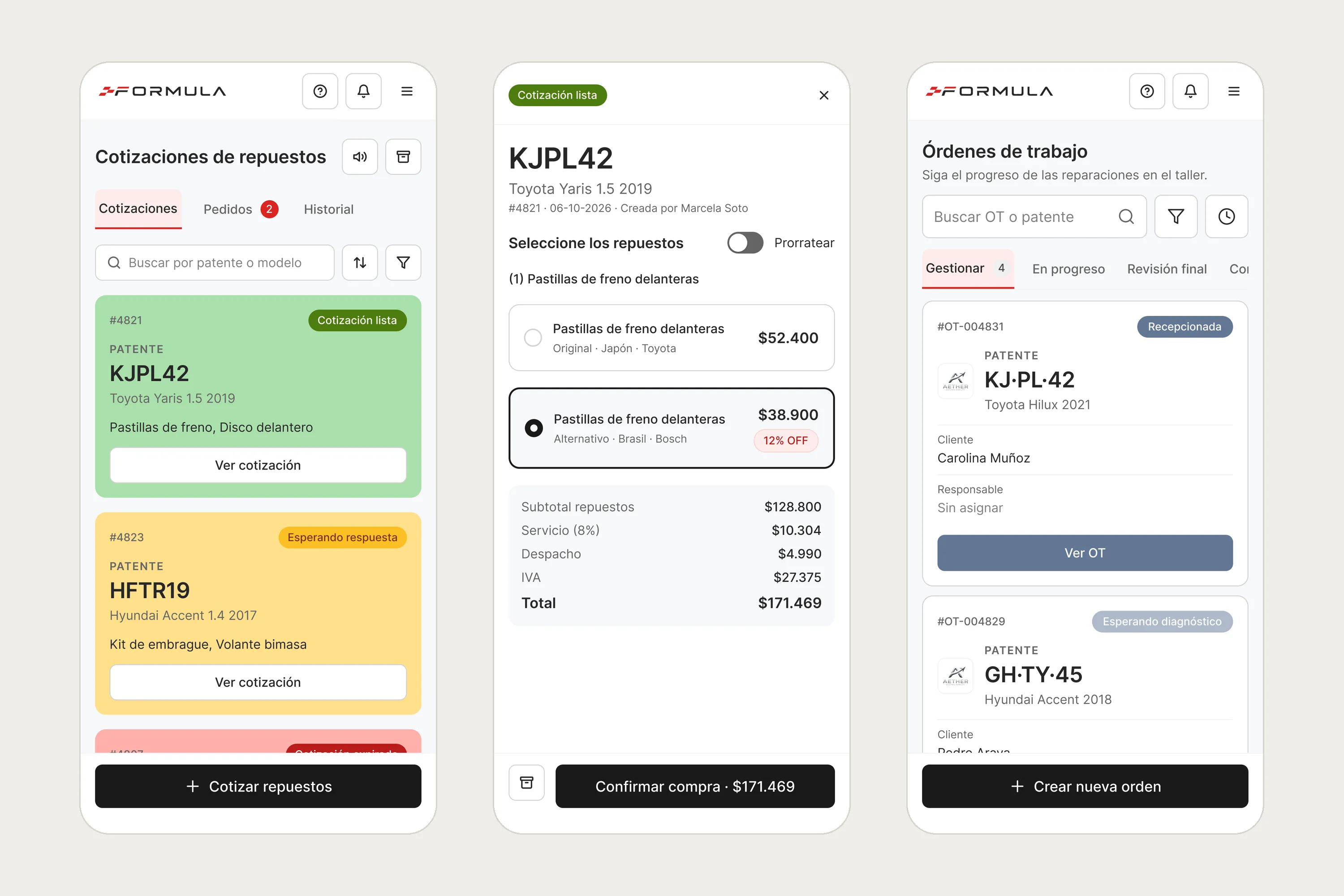
Beyond Fórmula, I designed TurboShop’s internal quotation app, a warehouse app and a motorcycle application. All three are in use.
Leading the team
This is my first role leading designers. I run weeklies on Mondays and Fridays to distribute work and track goals, and I assign work by each designer’s strengths instead of expecting everyone to work the same way.
- Delegate. My instinct was to own every pixel. Leading meant trusting the team with real ownership and designing through them, not around them.
- Teach with patience. The best work came from explaining the why and giving context, not just handing over tasks.
- Own the role. The hardest shift was internal: taking responsibility for time, flows and decisions instead of staying in maker mode.